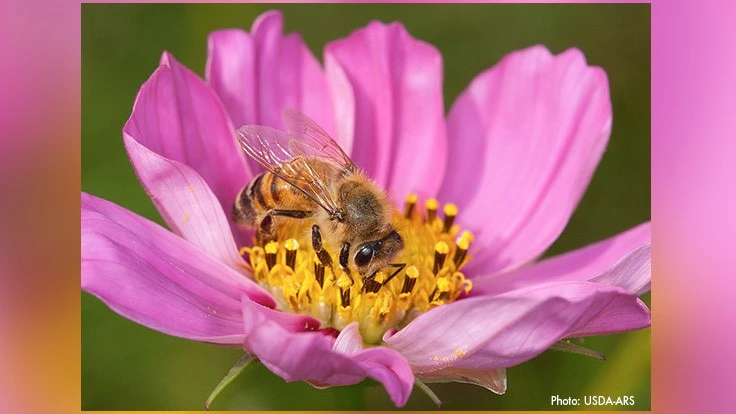
TROY, Mich. – During National Pollinator Week and throughout the year, Rose Pest Solutions is partnering with local organizations and apiaries, like Gaiser Bee Company of Cincinnati, Ohio, to help spread the word about the importance of preserving pollinators and the impact they have on the environment. Gaiser and Rose have teamed up to design native wildflower seed packets that customers of the apiary at 3402 Kleeman Rd. can pick up and plant to attract honey bees to their home gardens. The partnership also includes Rose’s support of Gaiser’s Host-a-Hive Program and the urban bee farm’s early spring community party.
According to the Pollinator Partnership, 75 to 95 percent of all flowering plants need help with pollination. Pollinators are key to transferring pollen within healthy and productive agricultural ecosystems. Honey bees are among the beneficial insects that pollinate more than 180,000 different plant species. Studies show honey bees make approximately two million flower visits to produce a pound of honey. One colony can produce 100 pounds of honey, with total agricultural production reaching between $1.2 and $5.4 billion annually.
“Rose Pest Solutions appreciates the importance of beneficial insects in our ecosystem and we’re especially dedicated to protecting pollinators,” said Dale Hodgson, certified entomologist and B.C.E. regional technical supervisor for Rose Pest Solutions. “We’re proud to partner with apiaries in the markets we serve – like Gaiser Bee Company in Ohio. Honey bees are really cool insects; they help to raise people’s awareness of the importance of pollinator health, and they also help make connections between the field and the table.”
In serving commercial and residential customers, Rose Pest Solutions works to protect beneficial pollinators. If a honey bee hive or nest is discovered on a customer’s property, Rose prefers safe relocation of the colony whenever possible. This may involve reaching out to a local beekeeper or relying on Rose’s internal experts that have relocated live honey bee colonies in the past.
In addition to Gaiser, Rose enjoys successful partnerships with Detroit Hives in Detroit, Michigan, as well as The Harpur Bee Hive at Purdue University in Indiana.
Following are simple tips for those interested in helping pollinators thrive:
- Plant flowers and flowering plants in gardens that will bloom at different times of the year - spring, summer and autumn.
- Place colorful flowers in clusters to make bee foraging more efficient.
- Create a pollinator-friendly habitat realizing that in addition to nectar and pollen, various species will need other things, such as bare soil or log piles to nest in, and (in the case of butterflies) other host plants for the caterpillars.
- Reduce pesticide use, increase green spaces (hint: a manicured lawn is not a green space that many species can utilize), and minimize urbanization.
- Educate neighbors, schools, and community groups about the importance of pollinators.
- Do not establish a beehive in your yard without instruction and support of a trained beekeeper.
Rose Pest Solutions also provides a wide-range of services, including residential and commercial pest control. Technicians always strive to use the least invasive, most effective pest control services to fit each customer’s unique needs. Rose Pest Solutions is dedicated to being a good global citizen by keeping environmental impact and human safety at the forefront of its daily operations, which is demonstrated regularly in both residential and commercial services. Technicians at Rose also receive ongoing education and training, which allows them to provide the latest in pest management technology.
Latest from Pest Control Technology
- Earn CEUs from Your State at Next Week’s Mosquito Control Virtual Conference
- Preserving Culture, Providing Opportunities Key in Hoffman’s Decision
- Winter Weather Could Decide How Bad Mosquito Season Gets
- Trent Frazer Discusses How Mosquitoes Survive Winter
- Barnes Exterminating Acquires Tennessee Pest Solutions
- Pest Index Up 9% YOY in January
- Arrow Exterminators Acquires Hoffman's Exterminating
- PMPs Plan Mera Peak Summit for Parkinson's





