New-hire training, day one. Setting: A classroom with about a dozen people, somebody up front with slides and handouts talking about pests and equipment you’ve never heard of. Tension levels? High.
What if we could make training for new hires more digestible — more hands-on and interactive? In my experience as a training manager at Blue Sky Pest Control in Phoenix, Ariz., I have found that a combination of slide presentations and stories, along with hands-on activities, increases new-hire knowledge retention and satisfaction at work. This is nothing new, but I think my approach and training materials are a little different than most … and my trainees agree!
After each training session, I send out an anonymous survey. Invariably, the answer to the questions “What helped you learn the most?” “What helped you remember the lesson?” and “What was the best part of class?” is always the same: my preserved and live demonstration collections. Talking about pest identification, treatment protocols and SOPs while looking at actual specimens creates an interactive environment that is both memorable and fun.
Interested? I hope so. Read on, then try out a few of these techniques. Your training results will improve and be far better than slides alone or, God forbid, just reading a handout.
Presentation Basics:
- Smile. Speak up! Show excitement! This may be your new hire’s first exposure to pest control. They may be nervous, but hopefully they’re excited, too. You want them to stay with your company long-term, right? Think back on when you first started and the people that got you visualizing a future in this field. Did you have a mentor? A love of learning about insects? It is now your job to instill that motivation in your students. Present with energy, give as much of yourself as you can, and it will pay you back tenfold.
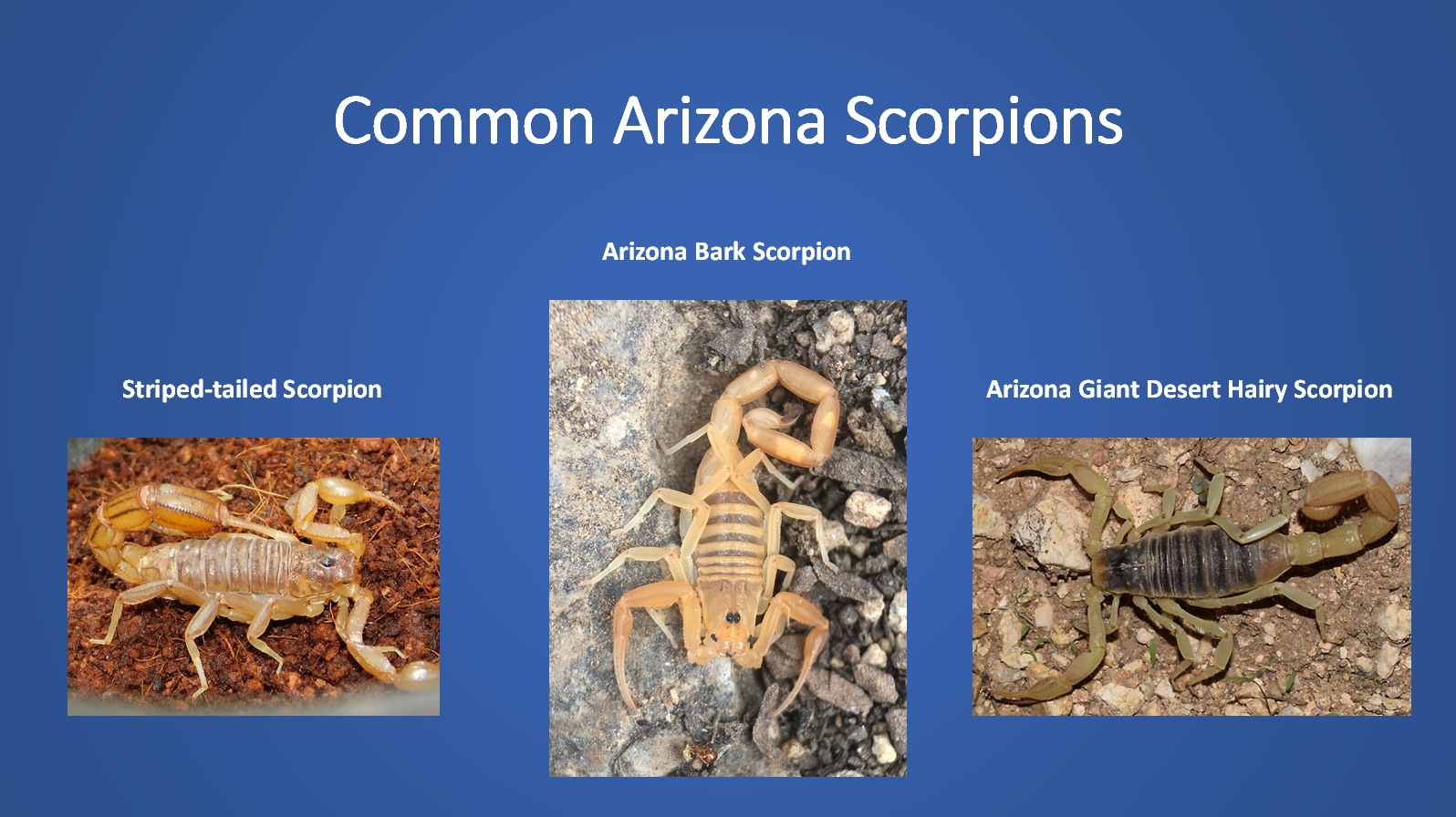
- Spruce Up Your Slides. If you’re using slideshows as part of your new-hire training, your slides should be visually appealing and vibrant, featuring sharp photos that clearly show the subject matter (see Figure 1). If talking about the proper use of a Webster brush for knocking down spider webs, for example, then any photo or video presented should be brightly lit, taken outdoors and in sharp focus, with the technique in question filling the frame for ease of viewing. Training videos should be shot at an account or similar location, not simulated at the office. Drab photos and wordy, text-filled slides are certain to lose your audience —avoid them like the plague whenever possible. When it comes to capturing your audience’s attention, sometimes white space can be your best friend.
- Engage Your Audience. Don’t just read handouts or slides to the class. Use them as a guide, but sum up the subject in your own words. Discuss any photo on the slide as it pertains to the point at hand, using personal stories and experiences to make your lessons relatable. Also, try not to talk to the room exclusively, but rather look your students in the eye, each in turn. Including them this way will help grow engagement.
- Keep it Brief. The formal portions of any presentation should be relatively short. Break up longer presentations to avoid overload or boredom. Give short breaks or design stopping points to conduct an activity. You’ll find your students will retain more information and have fun doing it.
- Go Hands-On. This can take many forms, such as strip cleaning a B&G or applying cockroach bait to a cabinet, but for our purposes, I will be discussing the use of pest specimen collections as a learning tool for new hires. I find that while using photos of a pest in a slide presentation is good, letting students handle samples of the pest is even better. But what type of collection should be used? How is a sample made? Where do the specimens (both live and dead) come from? I’ll address these questions next.
Preserved Demonstration Collections. For some of us, the term “collection” can be cringe-worthy. So much time and labor! I had to make so many insect collections in school that the thought of making them for work was certainly off-putting. The idea of pinning hundreds of specimens, perfectly aligned and tagged, was not an option for me. One, I didn’t have the time, and two, a traditional pinned collection was far too fragile for passing around the classroom. I considered several other options and decided to stick with simple. I like simple.
Wet collection consists of glass vials with Teflon-topped screw lids. I prefer 5-dram borosilicate vials for their size and clarity but always have a few larger ones around just in case I want to preserve a large scorpion, spider or beetle. Once you have the vials, you will need a preservative and a collection label. A sample is only as good as the information collected with it, and getting it as complete as possible helps ensure your specimen stands the test of time.
Step 1: Obtaining Samples. Where do you get the pests to preserve? Start out by asking technicians and inspectors to bring in samples. Some people will place a bounty on a particularly desired species as a motivation or reward. Specify that they should try to keep these samples alive or at least fresh. If they can put them in a cooler, that’s even better — that way, the samples won’t start to rot before you get them. Other sources of insect pests for a collection may be advanced hobbyists or professional insect keepers, or you could collect samples yourself as you perform your job. You’ll be surprised how quickly your collection grows.
Step 2: Labeling. Each vial will need two labels: an identification label and a collection label. The identification label should indicate the genus and species of the specimen, followed by the order and family information, the common name, and finally, the name of the person who identified the specimen. If the species is unknown, write “undetermined species” on the label; it’s better that your label is incomplete rather than incorrect. For the collection label, record the city, county and state where the specimen was found, followed by the date collected, the habitat or activity the specimen was engaged in, and the name of the person who collected the specimen. This might sound like a lot, but it really isn’t. Let’s look at an example:
Identification Label
Solenopsis geminata
Hymenoptera: Formicidae
Tropical fire ant
ID: Bob Gilbert
Collection Label
Scottsdale, Maricopa Co., Arizona
14 August 2025
Colony located in dirt yard
Collected by Berry Hales
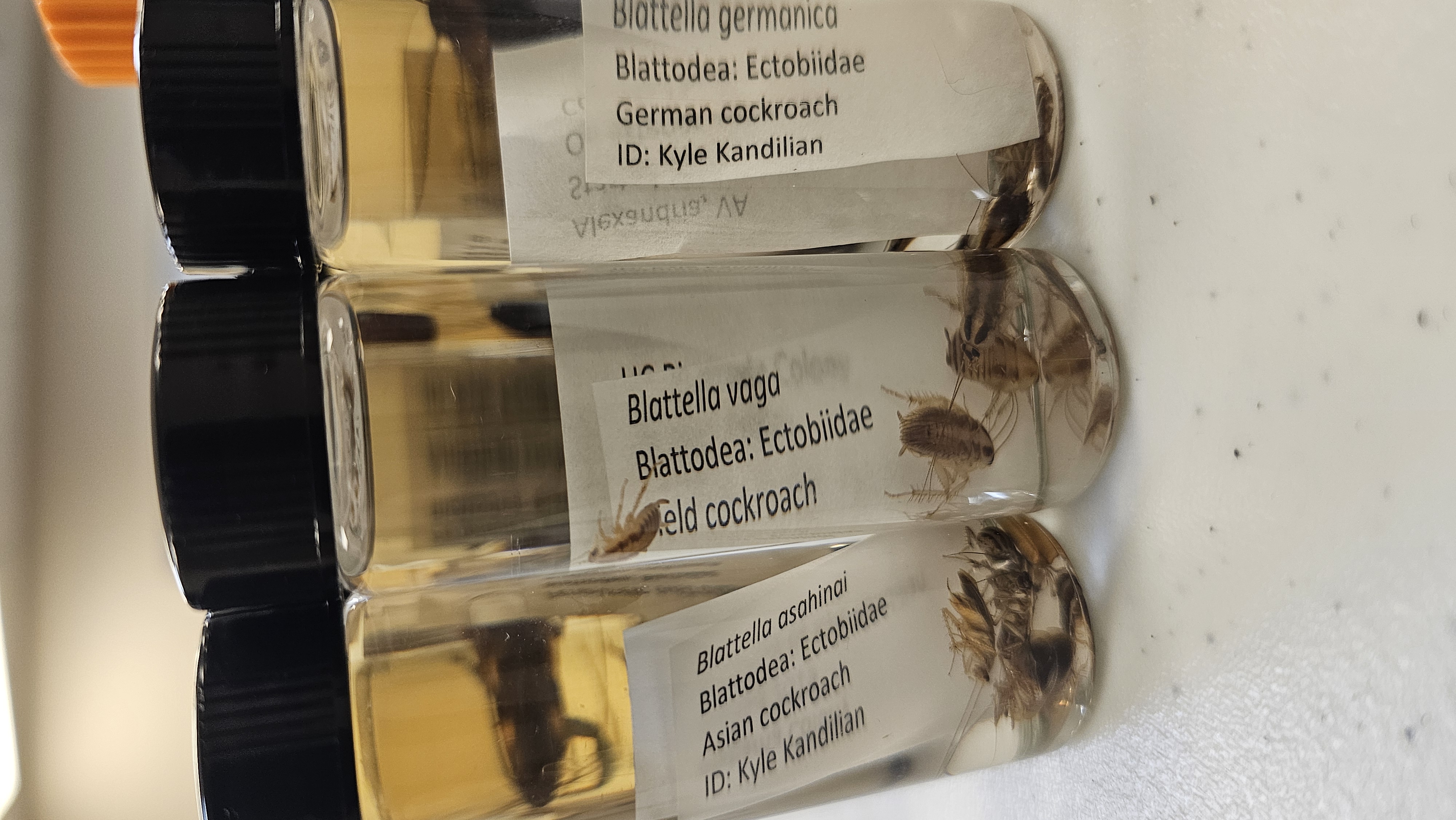
To ensure your labels’ longevity, type them up as shown and print them on a laser printer or, conversely, handwrite the labels using a fine-tip museum curation pen so the ink will not bleed in alcohol. Cut the labels with a paper cutter to get straight edges before applying them to the vial. Typically, I place the two labels back-to-back with the identification label pointed out (see Figure 3).
Step 3: Preservation. Once your labels are affixed, add the specimen and fill the vial with preservative. I use 70% ethanol, a good general-purpose preservative. If it changes color (for example, taking on an orange-brown tint) from liquids in the specimen, carefully change it out after a couple days. Congratulations — that specimen vial is now complete! Groups or collections of vials can be stored in something as simple as a small box or a custom wooden vial storage rack like those used by insect museums.
Step 4: Observation. These vials are great for training and will last indefinitely. They will usually survive being dropped, as the alcohol acts as a shock absorber to protect the specimen. This means your new hires can pass them around with little or no concern of damaging them while observing the pests’ structures in three dimensions — a field loupe can truly magnify the experience. There is one drawback: Alcohol does tend to fade the color of a specimen over time.
Live Demonstration Collections. What about live specimens? For training purposes, live is as close to “in the field” as you can get without, well, being in the field. Preserved specimen vials require much less space and time than live animals, but they will never have the same effect on audiences as a live specimen like a large tarantula. To make this work as a continual learning tool, the needs of the animal must be known and replicated as close as possible.
Step 1: Obtaining Samples. Try to collect species that are local to your area. I maintain live ant colonies of honeypot, desert carpenter, bicolored pyramid, fire, harvester and dark rover ants. With this assortment, I can talk about life cycles and control strategies with new hires while they observe the ants going about their normal activities. Depending on the species you’re interested in keeping, you may be able to find samples available for purchase, but as with preserved specimens, you can reach out to technicians, inspectors or hobbyists to help you grow your collection.
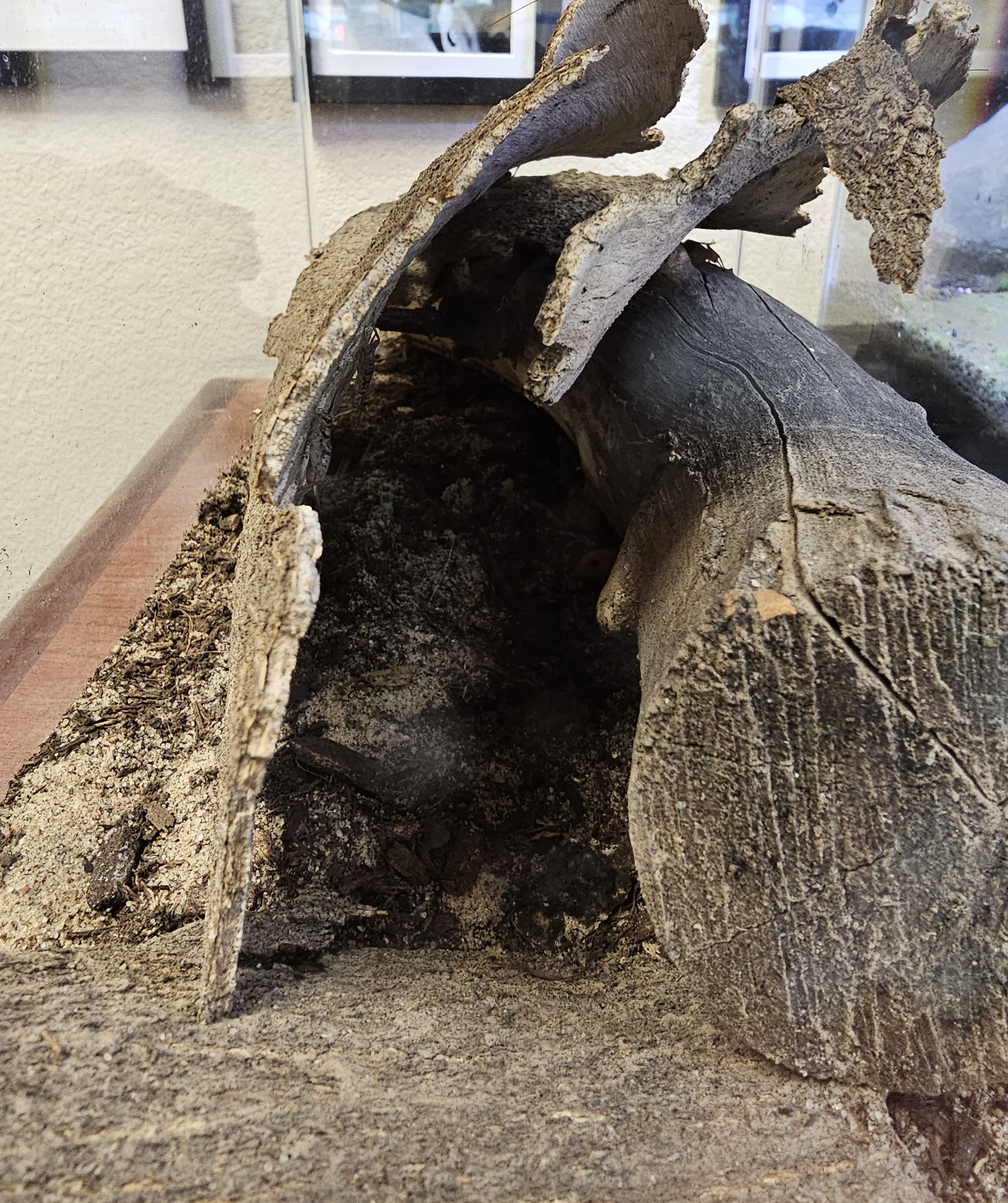
- Scorpions. I keep the three most common scorpion species in my area to teach identification and demonstrate why scorpions are hard to kill and how technicians can overcome their defenses. Scorpions are pretty easy to maintain: I have an enclosure with sandy soil, a bark slab and rocks to provide shelter (see Figure 2), and I mist the habitat weekly, while providing crickets or mealworms. These ancient creatures are resilient and do well in this setup, but obviously this habitat wouldn’t work for something like stored product pests.
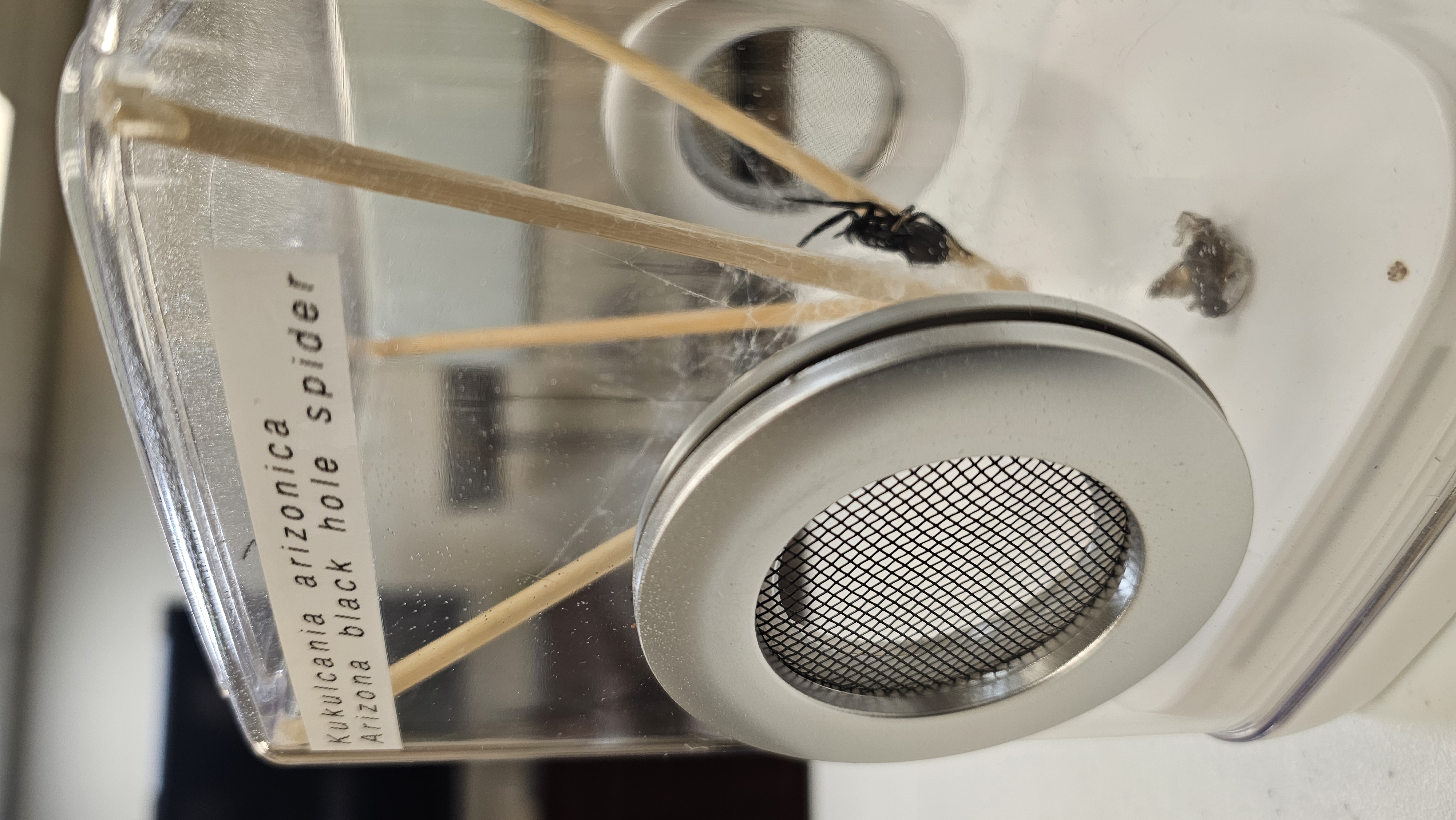
- Spiders. Wolf spiders, the various widow species and even recluse spiders are easy to keep and are memorable to technicians. I personally prefer widow spiders as they tend to stay visible and are rather showy. Plus, most places in the United States have at least one species of widow spider. All that is needed for a spider habitat is a small container with a good seal that has been modified for very good ventilation (see Figure 4). I’ve found food storage containers with two 2-inch diameter vent holes drilled into the sides and covered in fiberglass window screen work well. Glue a few dowels to the bottom and you have a simple, escape-proof habitat that is easy to clean. Depending on the size of the spider, you can provide fruit flies, crickets or mealworms.
- Tarantulas. I keep an Arizona blonde tarantula, our most common tarantula species locally, in a 10-gallon glass aquarium with a screen lid. This is a showy, gentle species that is hard to forget. Unlike the smaller spiders listed above, this species burrows, so her habitat requires six inches of substrate to dig in.
- Stored Product Beetles. Red and confused flour beetles, saw-toothed grain beetles and warehouse beetles are by far the easiest live specimens to rear. I typically use a quart-sized mason jar from which I have replaced the metal lid with filter paper. Why this paper? It is available in multiple sizes and already cut into round pieces, plus the pores are extremely small and it doesn’t tear with normal use. After rinsing and drying the jar, add the food substrate appropriate for the species. For example, I keep warehouse beetles on ground dog kibble and old-fashioned oatmeal. For flour and saw-toothed grain beetles, I replace the kibble with whole wheat flour, some wheat germ and a little brewer’s yeast. Add the beetles, cover the jar with the filter paper, screw on the metal ring and you’re done!
- Mealworms. For mealworm habitats, I use a plastic shoebox to which I add a one-inch layer of wheat germ, some whole wheat flour and a tablespoon of brewer’s yeast. A medium-sized potato or carrot works as a water source.
Step 3: Labeling. Label the outside of the habitat with the genus, species and common name of the animal housed within. For potentially dangerous specimens like widow spiders or scorpions, I also use “Caution, Do Not Touch!” stickers on the front of the habitat. Remember, if you are keeping an animal at work, you are responsible for it.
Collections in the Classroom. How useful these specimens will be depends on how they are organized. For a lesson plan based around insect or pest type, you might group them together by order or family. A stored product pest collection made up of beetles, moths, booklice, etc. would be great too. Carefully consider what information will be the most useful to your new hires.
For use in my own training classes, I purchased a preserved collection of 13 species of cockroach. This collection consists of all life stages — from oothecae to adults — of both sexes of most U.S. species. I also included one of the world’s largest cockroaches (Madagascan hissing cockroach) and one of the smallest (Florida cave cockroach) to show the diversity of species while grabbing the trainees’ attention. For cockroach class, I first present a carefully designed slide presentation and encourage audience participation by advising there will be a five-question quiz at the end. We then look at the diversity of species before focusing on those local to our area. We look at morphology and how it relates to the pest’s life cycle as well as how it influences control strategies and our SOPs. After we examine the preserved specimens, we practice doing a treatment. I have found that approaching a subject from multiple angles reinforces knowledge and ability, thus building confidence.
When speaking on spider control, I use a few different specimens, both live and preserved, to help highlight the lessons. Preserved specimens are great for filling in the live species gaps, as well as allowing for close examination with a field loupe to better show the various spinnerets, fangs and eye patterns (see Figure 5).
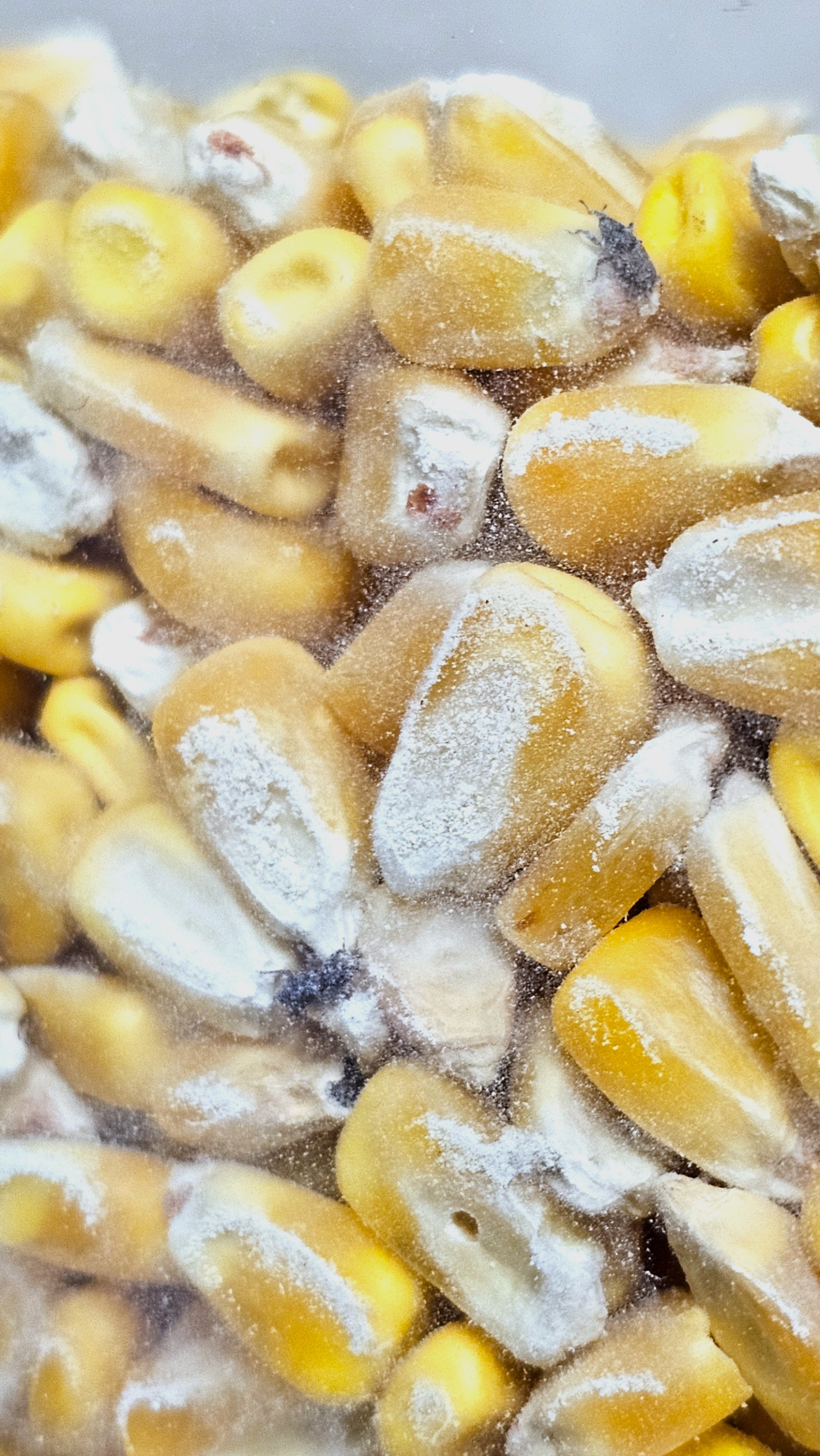
For stored product pests, I show the class a mix of live species collected in feed corn (see Figure 6). Trainees can watch as weevils start things off by chewing into the corn kernel where their larvae will develop. The dust created by that feeding is in turn fed upon by the other species. If fresh corn isn’t added, the weevils will be the first to die off, as they need the intact kernel. This demonstration allows me to talk about succession of species in such commodities (e.g., primary versus secondary pests), and is a great lesson for ACE review, as species succession of stored product pests is on the exam.
In addition to observation, another use for these collections is pest identification. With my specimens, I show trainees how to search for certain physical structures to help them look up the species until they’re more familiar. An unknown or undetermined species can usually be identified by its order readily enough; pull out that order’s collection and they may be able to match the sample to a previously identified specimen.
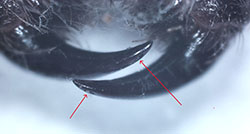
©Bob Gilbert. Figure 5.
Expanding Your Collections. Before investing time and money into a vast collection of specimens that would rival those at the American Museum of Natural History, consider your goals. Who is your audience? What are your resources? Many species can be kept in a single jar or small habitat, but a big collection takes time and a bit of money for upkeep.
Keep in mind that a live specimen could be kept just until the class is over — to be later released where it was captured or added to the preserved collection — so before you start knocking out walls to make an insect-rearing lab or museum, find out if you like being a keeper and if they help you in your classes. If you are like me, once you have a few live species and a growing preserved collection, you’ll be hooked.
If you need additional information on collections, identifications or classification, consult a good general entomology text or field guide. When looking online, avoid sources that may be questionable. I limit my searches to university extension sites or other government sites whenever possible, as many private or industry websites are riddled with errors.
Bob Gilbert is the staff entomologist and training manager for Blue Sky Pest Control in Arizona (www.blueskypest.com). He is a Board Certified Entomologist in Urban and Structural Entomology and holds a Master of Science degree in entomology from Clemson University. All photos © Bob Gilbert.
Figure Captions
Figure 1. Slide used to introduce common scorpion species in the Phoenix Valley. Note the three large photos with very little text.
Figure 2. Typical Arizona bark scorpion enclosure.
Figure 3. Portion of the preserved cockroach collection. Left, Asian cockroach; Middle, Field cockroach; Right, German cockroach.
Figure 4. Typical spider enclosure housing a female Arizona black hole spider.
Figure 5. Structural detail of venom openings in preserved Carolina wolf spider’s fangs.
Figure 6. A mixed colony of stored product pests in feed corn.
Latest from Pest Control Technology
- Arrow Exterminators Acquires Hoffman's Exterminating
- Earn CEUs at Next Week's Mosquito Control Virtual Conference
- NCPMA Graduates New Premier Technicians
- Pest Management Foundation Announces New Scholarships
- Coast Releases Report on Fuel Spend
- WPCA Hosts Midwest Pest Con
- Google Ads Mistakes That Cost PCOs Thousands
- Zach DeVries Details his Cockroach Research, Importance of UK Short Course