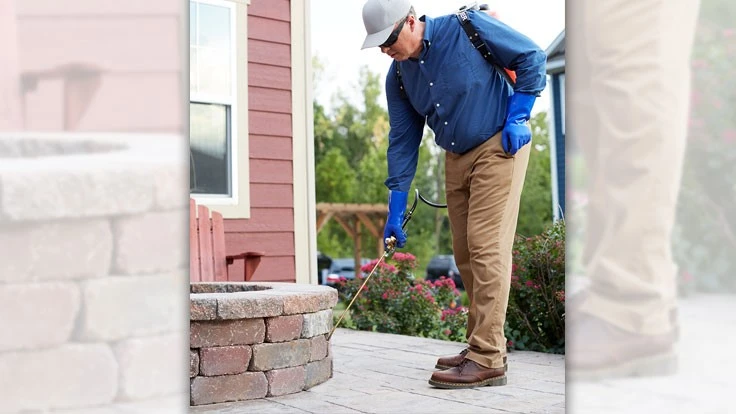
Where do treatments on complex surfaces fall short? It usually comes down to applying just one product to multiple surface types and hoping it does the job.
According to Dr. Steven Kells, associate professor with the University of Minnesota, relying on one product to do it all often unravels a technician’s efforts to effectively treat complex surfaces.
 “A product may work well for a spider job under eaves where shade is predominant but when that same product is applied to vinyl siding that receives a lot of sun or where the sprinkler consistently hits the area, the effectiveness of the product can be impacted,” says Kells.
Mulch around the foundation of a building can be another tricky surface because of its organic composition and because pests do not always travel on top of the mulch. Technicians need to ask the homeowner (or offer to do it for them) to create a mulch-free barrier away from the foundation and apply the product directly to the soil that the pests travel across.
What can technicians do to make sure their complex surface treatments are more effective? Here are some recommendations:
- Realize the need to use multiple products or formulations depending on the surface type.
- Select the right application equipment to match the surface you are treating. A power sprayer may be appropriate for one area of the property and a compressed air sprayer for another.
- Invest the time to observe and document the types of complex surface substrates that are present in the account.
- Make the correct pest identification and use pest trend analysis to track where the pests are most active in the account.
- Sunlight and humidity can impact the effectiveness of treatments and break down an active ingredient faster. Note the sunny and shady sides of structures and factor that in when selecting and applying products.
- Identify cultural practices that could impact the effectiveness of an application including excess moisture or standing water, poorly positioned sprinklers or excess clutter near target areas.
- Document your observations about your treatments and note any physical or cultural changes to the property that would impact a treatment’s effectiveness such as a new cement patio, mulch being applied too close to the foundation, poor landscape maintenance practices, the addition of a sprinkler system, etc.
Latest from Pest Control Technology
- Earn CEUs from Your State at Next Week’s Mosquito Control Virtual Conference
- Preserving Culture, Providing Opportunities Key in Hoffman’s Decision
- Winter Weather Could Decide How Bad Mosquito Season Gets
- Trent Frazer Discusses How Mosquitoes Survive Winter
- Barnes Exterminating Acquires Tennessee Pest Solutions
- Pest Index Up 9% YOY in January
- Arrow Exterminators Acquires Hoffman's Exterminating
- PMPs Plan Mera Peak Summit for Parkinson's





