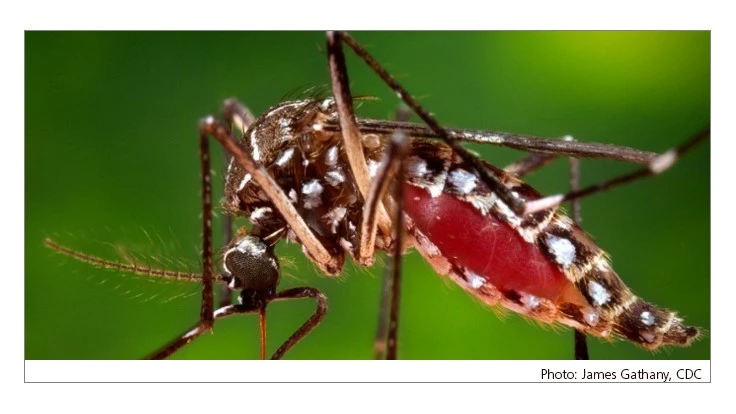
As reported by Science Daily, understanding how neighborhood dynamics regulate mosquito bites is key to managing diseases like West Nile virus and Zika virus.In a recent Parasites & Vectors, researchers reported that in Baltimore, Md., socioeconomic differences between neighborhoods influence bite risk, with rats being a primary blood meal source in lower income neighborhoods.
Shannon LaDeau, a disease ecologist at the Cary Institute of Ecosystem Studies, explains, "Mosquitoes thrive in temperate cities and are a global threat to public health. As part of the Baltimore Ecosystem Study, we were interested in revealing how urban landscape features and social patterns influence mosquito biting behavior, to better inform targeted management."
The study took place over two years in five rowhome neighborhoods in southwest Baltimore. Neighborhoods represented a socioeconomic range: below, at, or above the City's median household income. Abandonment, trash removal, housing quality, landscaping, and pest control varied on a block-by-block basis. These factors are known to influence the success of mosquitoes, which need vegetation, water, shade, and blood to survive.
CLICK HERE to read more.
Source: Science Daily
Latest from Pest Control Technology
- Earn CEUs from Your State at Next Week’s Mosquito Control Virtual Conference
- Preserving Culture, Providing Opportunities Key in Hoffman’s Decision
- Winter Weather Could Decide How Bad Mosquito Season Gets
- Trent Frazer Discusses How Mosquitoes Survive Winter
- Barnes Exterminating Acquires Tennessee Pest Solutions
- Pest Index Up 9% YOY in January
- Arrow Exterminators Acquires Hoffman's Exterminating
- PMPs Plan Mera Peak Summit for Parkinson's





