Jan Sobotnik
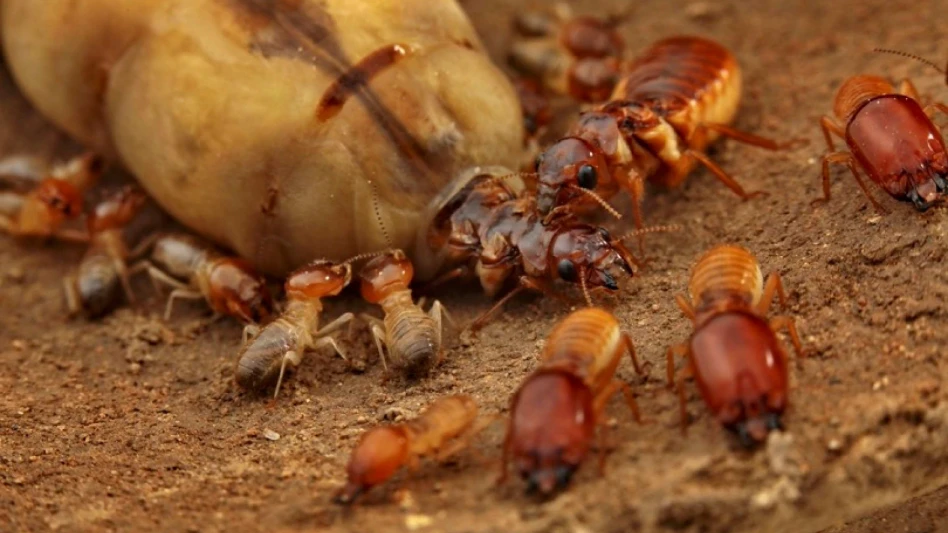
SYDNEY – Termites evolved massive, tightly organized colonies not by becoming genetically more complex but by shedding genes, including those linked to sperm competition, according to new research from the University of Sydney.
The international study, published in Science, traces termites back to cockroach ancestors that shifted to a wood-based diet. That move set off a chain of genetic changes that ultimately produced termites’ defining traits: lifelong monogamy, extreme cooperation and colonies that can number in the millions.
Professor Nathan Lo, an evolutionary biologist at the University of Sydney, said the research challenges long-held assumptions about how complex societies evolve.
“The surprising result is that termites increased their social complexity by losing genetic complexity,” Lo said. “That goes against the idea that bigger societies need bigger or more complex genomes.”
By comparing high-quality genomes from cockroaches, wood roaches and multiple termite species, researchers found termites have smaller, simpler genomes. Many genes linked to digestion, metabolism and reproduction were lost as termites became dependent on food sharing and cooperative living.
One of the most telling losses involved genes that build sperm tails. Unlike most animals, termite sperm are immotile. According to the researchers, this reflects the disappearance of sperm competition, which is a strong signal that termite ancestors had already evolved strict monogamy.
“In species where females mate with multiple males, sperm competition is intense,” Lo said. “Once monogamy was locked in, there was no pressure to keep those genes.”
The study also sheds light on how termite colonies manage labor. Experiments showed that nutrition early in life determines whether an individual becomes a worker or a future king or queen. Well-fed larvae become non-reproductive workers, while those fed less retain the ability to reproduce later.
These food-sharing feedback loops, Lo said, allow colonies to stay stable and efficient over long periods.
The research, led by the University of Sydney in collaboration with scientists from China, Denmark and Colombia, offers new insight into how social systems can emerge through simplification rather than expansion, a finding with implications well beyond termites.
Source: University of Sydney
Latest from Pest Control Technology
- Earn CEUs from Your State at This Week’s Mosquito Control Virtual Conference
- Jody Green Talks Ticks at Purdue Conference
- Truly Nolen Pest Control Promotes Freize, Hackett
- Preserving Culture, Providing Opportunities Key in Hoffman’s Decision
- Winter Weather Could Decide How Bad Mosquito Season Gets
- Trent Frazer Discusses How Mosquitoes Survive Winter
- Barnes Exterminating Acquires Tennessee Pest Solutions
- Pest Index Up 9% YOY in January