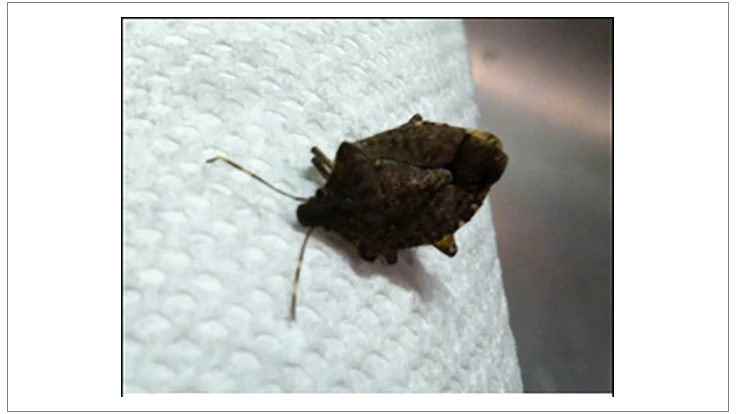
Many things can affect the size and range of insect populations, including the climate, the availability of food sources, and the absence or presence of predators. But when it comes to certain stink bugs, researchers have found that temperature is the most important factor affecting regional distribution and abundance, ESA reports.
By using complex spatial and statistical analyses, entomologists from Maryland, Virginia, and Delaware determined that temperature is the primary driver of stink bug patterns, and they identified differences in thermal tolerances among native and invasive stink bugs.
The researchers conducted a survey of three stink bug pests — the invasive brown marmorated stink bug (BMSB) and two native insects, the green stink bug and the brown stink bug — in soybean fields in Maryland, Virginia, West Virginia, and Delaware. They found that the abundance of BMSB became lower as temperatures increased in June. In fact, no BMSBs were found in fields with average June temperatures that were higher than 23.5º C (74º F).
However, in contrast to the invasive BMSB, the abundance of the native stink bugs increased as temperatures rose.
Click here to read the entire article.
Source: ESA
Latest from Pest Control Technology
- BOM Hosts Dinner at NPMA Legislative Day
- Rear Admiral Scott Moore Shares Five Essential Leadership Principles
- 2026 NPMA Legislative Day Photo Gallery
- Fleetio Launches AI Service Advisor
- Shannon Sked Discusses Preemption and Legislative Day Importance
- Routes to Riches with Kemp Anderson: Ep. 1 — 2026 Outlook
- NPMA Honors Industry Leaders At 2026 Legislative Day
- NPMA Legislative Day Highlights Farm Bill Momentum and Push for Pesticide Preemption