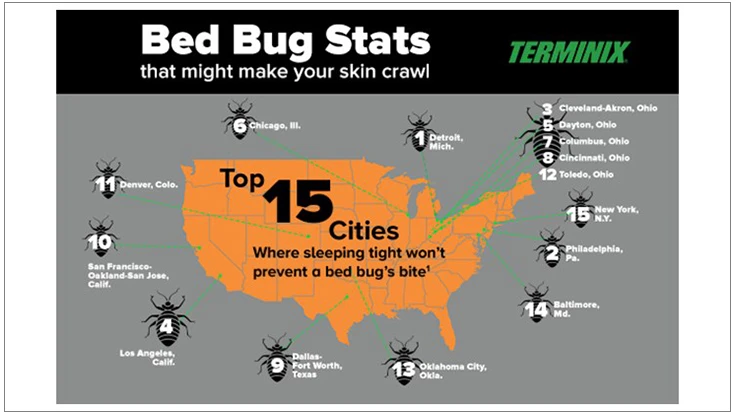
MEMPHIS, Tenn. — Terminix released its sixth annual ranking of bed bug-infested cities today. For the first time in four years, Philadelphia was outranked by Detroit, which stole the top spot.
Rounding out the top 15 bed bug cities in the United States are:
1. Detroit, Mich. (4)
2. Philadelphia, Pa. (1)
3. Cleveland-Akron, Ohio (15)
4. Los Angeles, Calif. (14)
5. Dayton, Ohio (-)
6. Chicago, Ill. (5)
7. Columbus, Ohio (8)
8. Cincinnati, Ohio (2)
9. Dallas-Forth Worth, Texas (7)
10. San Francisco-Oakland-San Jose, Calif. (-)
11. Denver, Colo. (12)
12. Toledo, Ohio (-)
13. Oklahoma City, OK (-)
14. Baltimore, Md. (9)
15. New York, N.Y. (3)
"We've seen a steady increase in bed bugs since the 1990s, which has been influenced by increased international travel and infestations left untreated," said Paul Curtis, manager, technical services at Terminix. "Most of the cities in our top 15 are big tourist and business destinations, making travelers even more at risk for encounters with bed bugs -- whether it's on the plane, at their hotel, in a movie theater or riding in a taxi. The name 'bed bug' is deceptive, as these pests can thrive just about anywhere."
The list of top cities for bed bugs was created by compiling inbound lead data from the more than 300 Terminix branches across the country. The rankings represent Metropolitan Statistical Areas (MSAs) with the highest volume of calls from Jan. 1, 2015 to Dec. 17, 2015.
******************************************
Terminix also created the following infographic with some skin-crawling facts about these hitchhikers.

Latest from Pest Control Technology
- BOM Hosts Dinner at NPMA Legislative Day
- Rear Admiral Scott Moore Shares Five Essential Leadership Principles
- 2026 NPMA Legislative Day Photo Gallery
- Fleetio Launches AI Service Advisor
- Shannon Sked Discusses Preemption and Legislative Day Importance
- Routes to Riches with Kemp Anderson: Ep. 1 — 2026 Outlook
- NPMA Honors Industry Leaders At 2026 Legislative Day
- NPMA Legislative Day Highlights Farm Bill Momentum and Push for Pesticide Preemption