iStock
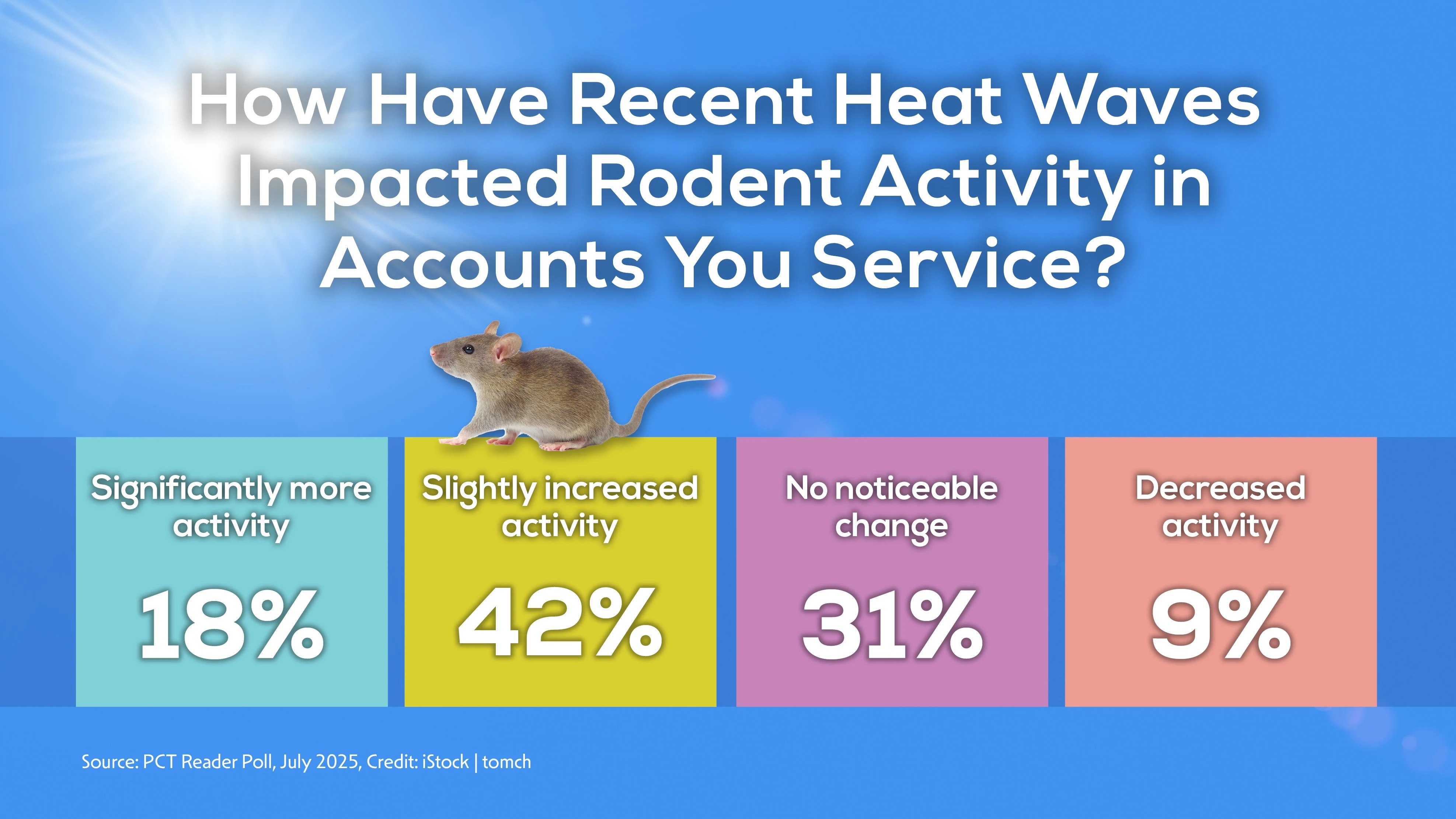
CLEVELAND – The United States Environmental Protection Agency (EPA) indicated that heat waves have become more frequent and more extreme in recent decades, especially in metropolitan areas. How does extreme heat impact rodent pressure? It’s a mixed bag, according to results from a recent PCT reader poll.
According to poll respondents, 42% reported slightly increased rodent activity in accounts they serviced during recent heat waves, while 18% reported significantly more activity. On the other hand, 31% of respondents saw no noticeable change in rodent activity and 9% reported a decrease in activity.
Anthony Sorrentino, business development and sales manager of Pest Pros in Kalamazoo, Mich., said rodent activity has slightly increased overall for the company due to heat waves. The bigger issue for Sorrentino is significant temperature fluctuations.
“When we get those sudden shifts from extreme heat to cooler evenings, it seems to push rodents to seek more stable, sheltered environments and, often, that means structures,” he said.
By using Smart Boxes, Mike Majdanski, SMART Systems manager at Anticimex company American Pest, Fulton, Md., has found that rodent trending movement and catch data in the summer versus winter seasons are opposite.
“I can look at the interior rodent activity from our proprietary passive infrared Smart sensors as far back as three years and see increased activity in the colder months as rodents seek shelter indoors and decreased activity as summer nears,” Majdanski said.
But Majdanski also has seen an increase in rodent catches during warmer months. “It’s almost as if the rodents are leaving our customers’ buildings as the weather warms up and walk right into our Smart Boxes on the outside,” he said.
Josh Erdman, president of Erdye’s Pest Control, Green Bay, Wis., said it is interesting to track how rodents will move to different areas of homes during extreme heat. He said he and his technicians will do less rodent trapping in attic areas during warmer months, but this “seems to force the mice to show more activity in the basement crawlspaces.”
The temperature instability in Michigan this summer has affected pest cycles, Sorrentino said, and pest pressure this year has been higher. “Rodents are one of the No.1 structural pests we deal with in Michigan, year-round, but especially during periods of environmental stress like we’ve had this year,” he said. “Moderate to high rodent pressure is present across Southwest lower Michigan, and we seem them in every setting: residential neighborhoods, commercial facilities, rural properties, you name it.”
Participate in PCT’s latest poll question: How is your company using AI tools?
Latest from Pest Control Technology
- Coast Releases Report on Fuel Spend
- WPCA Hosts Midwest Pest Con
- Google Ads Mistakes That Cost PCOs Thousands
- Zach DeVries Details his Cockroach Research, Importance of UK Short Course
- Sprague Strengthens California Leadership Through New Appointments
- PestInsight Empowering Youth in Africa and Beyond Through Education
- Guest Editorial: Making Safety the Standard on Every Service Call
- Truly Nolen Pest Control Promotes Tuck, Stewart