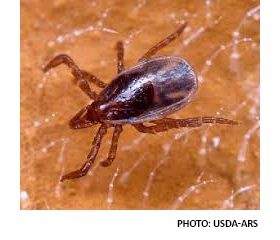
Researchers have identified the cause of a Kansas farmer's mysterious death this summer as Bourbon virus, Huffington Post reports.
Thought to be transmitted by ticks, the virus "was fast-moving and severe, causing lung and kidney failure, and shock," The New York Times reported, killing the previously healthy man after only 10 days in the hospital.
Together, Centers for Disease Control and Prevention (CDC) and University of Kansas Hospital researchers identified the virus as a thogotovirus, part of a larger type of viruses called orthomyxoviruses, Dana Hawkinson, M.D., an infectious disease specialist at The University of Kansas Hospital said.
Bourbon virus, named after Bourbon County, Kansas, where the only known patient lived, is similar to viruses seen previously in Eastern Europe, Africa and Asia, said Hawkinson, but nothing like it had ever been identified in the Western Hemisphere before.
For pest management professionals working outside, CDC provides the following tips for staying tick-free.
Avoid Direct Contact with Ticks
Avoid wooded and bushy areas with high grass and leaf litter.
Walk in the center of trails.
Repel Ticks with DEET or Permethrin
Use repellents that contain 20 to 30% DEET (N, N-diethyl-m-toluamide) on exposed skin and clothing for protection that lasts up to several hours. Always follow product instructions. Parents should apply this product to their children, avoiding hands, eyes, and mouth.
Use products that contain permethrin on clothing. Treat clothing and gear, such as boots, pants, socks and tents with products containing 0.5% permethrin. It remains protective through several washings. Pre-treated clothing is available and may be protective longer.
Other repellents registered by the Environmental Protection Agency (EPA) may be found at http://cfpub.epa.gov/oppref/insect/.External Web Site Icon
Find and Remove Ticks from Your Body
Bathe or shower as soon as possible after coming indoors (preferably within two hours) to wash off and more easily find ticks that are crawling on you.
Conduct a full-body tick check using a hand-held or full-length mirror to view all parts of your body upon return from tick-infested areas. Parents should check their children for ticks under the arms, in and around the ears, inside the belly button, behind the knees, between the legs, around the waist, and especially in their hair.
Examine gear and pets. Ticks can ride into the home on clothing and pets, then attach to a person later, so carefully examine pets, coats, and day packs.
Tumble clothes in a dryer on high heat for an hour to kill remaining ticks. (Some research suggests that shorter drying times may also be effective, particularly if the clothing is not wet.)
http://www.huffingtonpost.com/2014/12/24/bourbon-virus-tick-kansas_n_6377932.html
Latest from Pest Control Technology
- Earn CEUs from Your State at Next Week’s Mosquito Control Virtual Conference
- Preserving Culture, Providing Opportunities Key in Hoffman’s Decision
- Winter Weather Could Decide How Bad Mosquito Season Gets
- Trent Frazer Discusses How Mosquitoes Survive Winter
- Barnes Exterminating Acquires Tennessee Pest Solutions
- Pest Index Up 9% YOY in January
- Arrow Exterminators Acquires Hoffman's Exterminating
- PMPs Plan Mera Peak Summit for Parkinson's





