Editor’s Note: The following article was adapted from Techletter, with permission from Pinto & Associates.
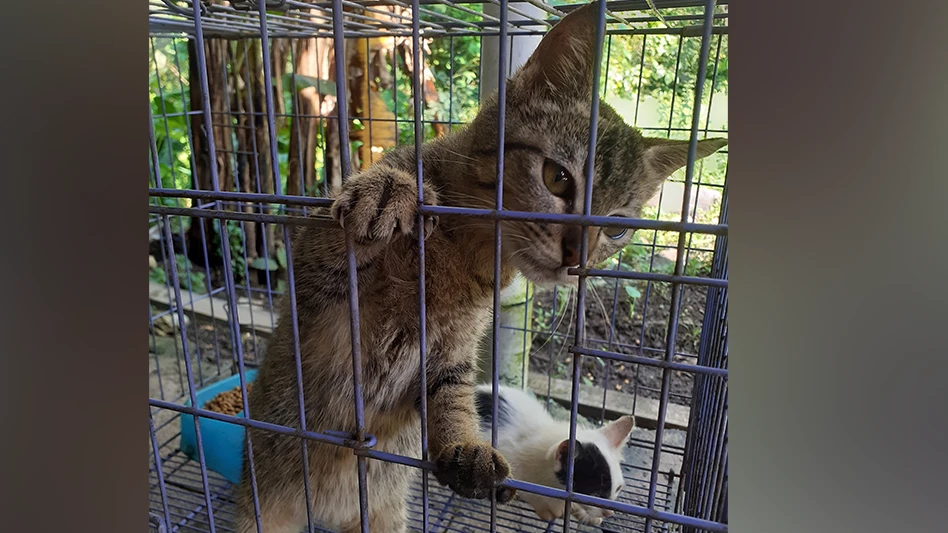
Wild (feral) cats are considered a pest problem because of the diseases and parasites they can transmit to people and other animals. With their reputation as very successful hunters, cats keep rodent populations down but they also kill many songbirds, game birds, rabbits, poultry, and other wild-life. Often though, people want you to trap feral cats because they are a nuisance with their yowling, and urinating and defecating in gardens and flower beds, or they may be denning underneath the porch, or their fleas may be a threat to your customer's pet cats.
You may be asked by a customer to trap a wild cat so it can be neutered, treated or euthanized by a vet, or domesticated, or so that it can be relocated. You may also find yourself addressing the issue of cats if you find a cat accidentally caught in one of your traps when you were trying to catch raccoons or some other animal instead. How you handle these situations will depend largely on your state's regulations regarding control of cats.
Can You, Or Should You, Trap Feral Cats?
Cat control is very much a gray area. In some states, PMPs are not allowed to handle cats at all, and in some states even individuals with a wildlife control license are not allowed to trap cats. In New York state, for example, those who are licensed Nuisance Wildlife Control Operators have no authority to handle cats or dogs. Cats are not considered wildlife even if they were born in the wild and are completely feral, they are considered companion animals. In New York, if a licensed operator does get involved with cats, he/she is considered to be acting as a private citizen, not as a state-licensed operator. Some states even allow feral cats to be shot. Other states leave feral cat control regulations to local jurisdiction.
A feral cat is defined as a cat with no collar that does not show friendly behavior. From a legal standpoint, cats are considered to be personal property in most states.
You have no legal authority to dispose of "found property" which is how a stray cat without a collar could be defined. if someone disputes your activity, you could be charged with a criminal lawsuit (under animal cruelty laws) and a civil lawsuit (under property laws).
It may be impossible to know whether you are dealing with a truly wild cat or someone's pet. In many jurisdictions, there is no law requiring the licensing of cats. Without tags or licenses, there's no way to prove whether or not a cat is a pet. Someone may tell you the cat is wild, but if they're wrong or lying, and you trap that cat, you could be sued. Or, you may be trapping a group of cats that everyone verifies are feral but what if a neighborhood pet joins that group and is trapped along with the feral cats? Even worse, what is those trapped cats are destined to be euthanized?
Needless to say, before you undertake trapping or any kind of feral cat control, make sure you are familiar with the local laws regarding trapping, transporting, and disposal of feral cats. You may need a permit or special license. Deciding to trap cats can involve legal issues, ethical questions, and possible public relations problems that you need to address first.
How to Trap Feral Cats
A truly feral cat usually avoids human contact. Even so, wild cats still like to live near humans (and their food) in old sheds and outbuildings, crawlspaces, under porches, in debris piles, junked cars, or storm drains. They become active at sundown and hunt through the night.
When trapping cats, take steps to protect yourself from bites, scratches, and fleas. Avoid kill traps even if the cat is to be euthanized since it is hard to release a dead pet! Use a live trap that is about 12x12x30 inches long. Bait the trap with canned fish, canned cat food, or chicken. One trapper swears by greasy chicken wings. You can also bait the trap with catnip or the dried, ground root of an herb called valerian which cats apparently find irresistible. Feed the cats in the traps for a week before you set the traps.
Place traps along the cats' travel routes such as along fence lines, near denning sites (see above), near their food sources like garbage cans or dumpsters, or near their toilet areas (you can smell the urine). Camouflage your traps with branches of shrubbery in public areas to avoid the notice of animal lovers. Check traps at least once a day so cats don't die of dehydration or stress.
Rather than euthanizing trapped cats yourself, one trapper says that, if at all possible, you should turn trapped cats in to the county or city animal control for legal disposal or adoption. You will also get a reputation for doing the right thing and you might get referrals for animal control work.
The authors are co-owners of Pinto & Associates.