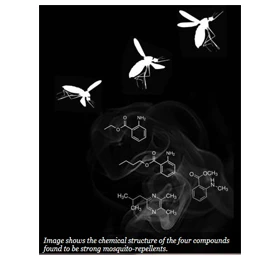
Researchers at the University of California, Riverside have identified (1) DEET-detecting olfactory receptors in insects that cause repellency and (2) three safe compounds that mimic DEET and could one day be used to prevent the transmission of deadly vector-borne diseases such as malaria, dengue, West Nile virus, and yellow fever.
The three compounds, all of which are found naturally in fruits, plants or animals and activate the same antennal cells in flies as DEET, are approved by the Food and Drug Administration for consumption as flavors or fragrances. They are already being used as flavoring agents in some foods. Just as encouraging, some of these compounds may be affordable to produce in large quantities.
Until now, no one had a clue about which olfactory receptor insects used to avoid DEET. Without the receptors, it was impossible to apply modern technology to design new repellents to improve upon DEET.
For more information, please visit: http://ucrtoday.ucr.edu/17991