|
|


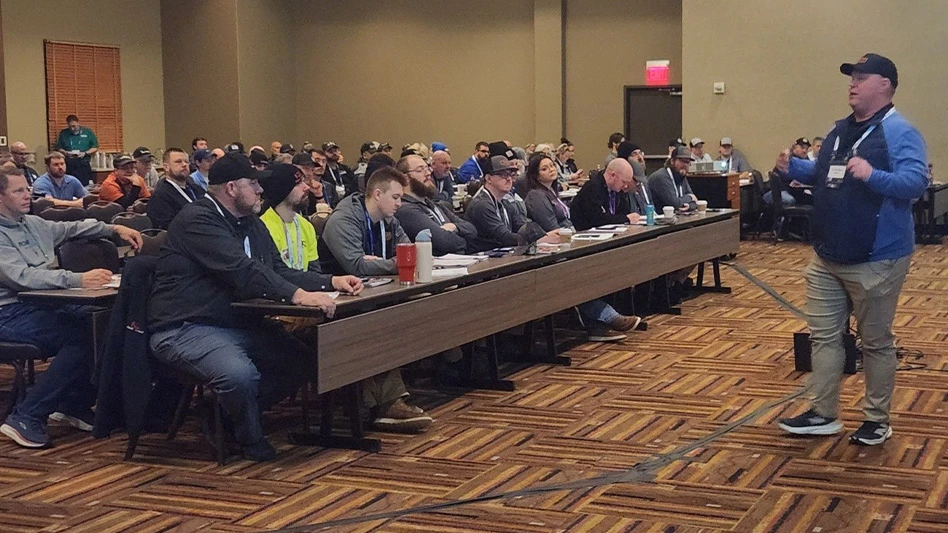
Editor’s note: More than 300 environmental health practitioners attended a three-day conference titled “Best of the Best” on Sept. 28-30. The event was organized by the Chartered Institute of Environmental Health (CIEH) and held at East Midlands conference centre in Nottingham, UK. Frances McKim, a partner in Active Solutions and PestBusiness.com filed the following report.
NOTTINGHAM, United Kingdom - Pest control may only account for a part of the Chartered Institute of Environmental Health’s (CIEH’s) (www.cieh.org) responsibilities – as topics such as housing, noise, waste management and environmental protection are also included – but even so an excellent series of presentations were given relating to pests and public health at their recent conference in Nottingham, UK.
Keynote lecturer, Dr Jerome Goddard, medical entomologist from the Mississippi State Department of Health, gave a highly amusing, yet thought-provoking review of pest- and vector-associated public health issues. He presented a whistle-stop review of the problems caused by insects from both direct insect effects (e.g., from insect bites) through to the range of indirect effects caused when insects provide mechanical transmission of diseases. Some of the health problems caused by insects have been present for many years, yet their international significance and rate of transfer is ever increasing. Climate change is extending their geographic range, while international travel has radically altered their occurrence. As Goddard said, “You may be on an eco-vacation in the Amazon yesterday and sitting in the dentist’s waiting room back home the next.”
He summed up his talk by assuring the audience that there is always going to be a need for people trained in pest identification and pest management. As professional practitioners, we must be diligent and prepared for pest-related disease outbreaks.
London Gears up for 2012
In a series of presentations, speakers representing the CIEH Olympic Working Group on Pest Management outlined the work that is already underway to ensure that the London Olympic Games are pest free. Group member Jonathan Peck, said: “We do not want the London Games to be remembered as the bed bug games.”
The group’s initial undertaking has been to publish guidelines designed to minimize pest problems for developers and builders in the construction industry. Although focusing on rodents, the publication also addresses the management of other pests such as mosquitoes, flies and birds. In addition, two further documents covering best practice in the hospitality and food industries were presented for consultation and feedback prior to finalization.
The pest controller is key
Finally, industry consultant John Charlton chaired a session discussing pest standards in the food industry. The public now demands higher quality which naturally includes a pest free site – yet this has to be balanced against a control of costs. Charlton said, “We must move away from Integrated Pest Management to a system of Integrated Pest Prevention. Charlton was joined by Phil Bentley, the Head of Health, Safety & Risk Management, for the 175+ strong group of Little Chef cafes and restaurants situated throughout the UK. Bentley detailed how Little Chef had recently moved away from one sole national contractor to a series of more regional pest control contractors. He felt an element of competition was no bad thing saying: “At the end of the day, pest control depends on the pest control controller on the site.”
Latest from Pest Control Technology
- Earn CEUs from Your State at Next Week’s Mosquito Control Virtual Conference
- Preserving Culture, Providing Opportunities Key in Hoffman’s Decision
- Winter Weather Could Decide How Bad Mosquito Season Gets
- Trent Frazer Discusses How Mosquitoes Survive Winter
- Barnes Exterminating Acquires Tennessee Pest Solutions
- Pest Index Up 9% YOY in January
- Arrow Exterminators Acquires Hoffman's Exterminating
- PMPs Plan Mera Peak Summit for Parkinson's