Amanda Joerndt
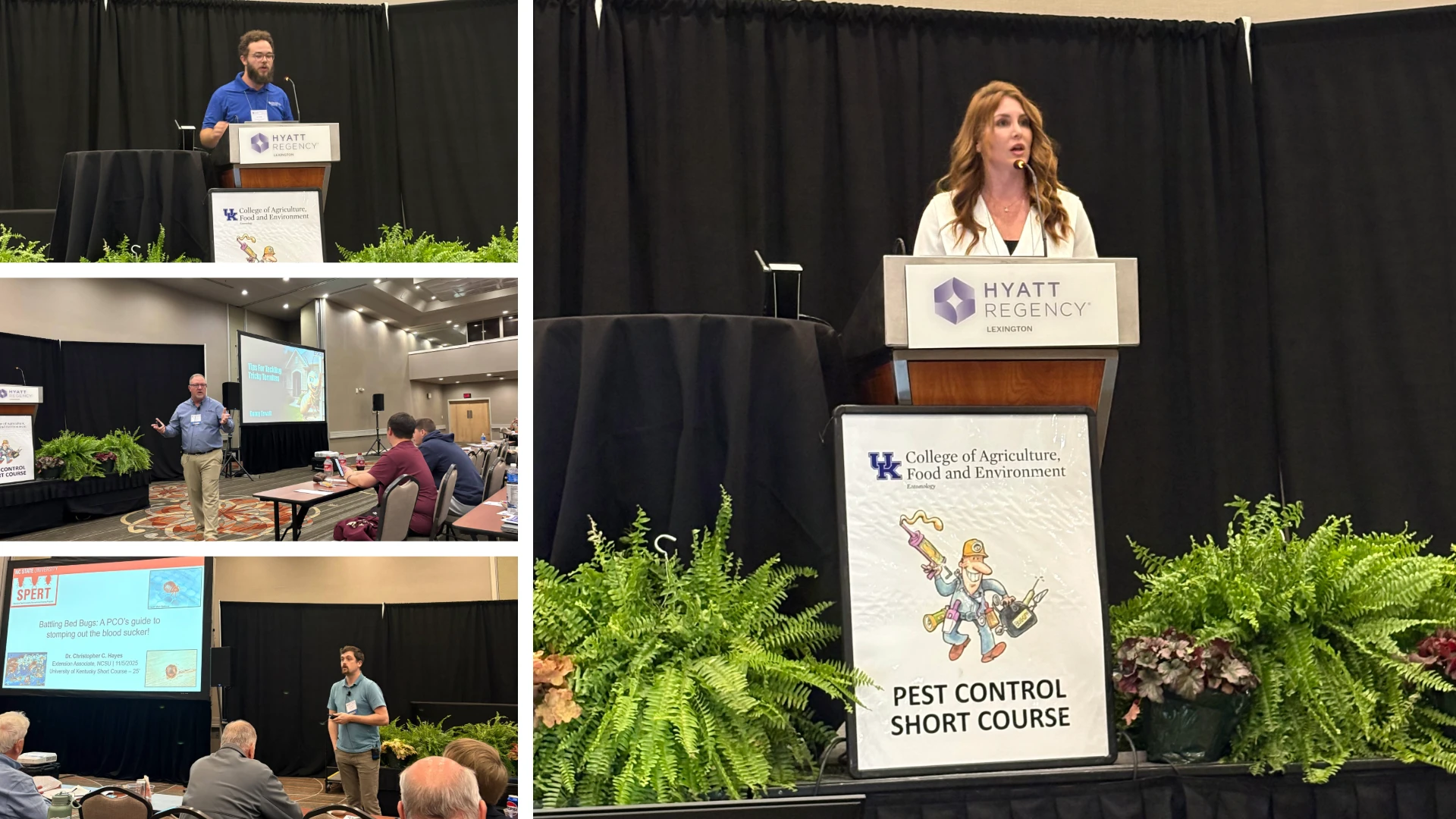
LEXINGTON, Ky. — PCT was in attendance at the 2025 University of Kentucky Short Course event, Nov. 4-6, to report on the latest research and technical tips, aimed to level-up PMPs’ knowledge in the field. Highlights from technical sessions included:
- Sydney Crawley, principal vector scientist, Rentokil Terminix, presented the behavior and biology of different mosquito species and the implementation of Integrated Mosquito Management (IMM) programs. Crawley said mosquitoes are the world’s deadliest animal, and the most important arthropod impacting human health. Since 2022, there have been an average of 16 more days in a calendar year where mosquitoes are active most likely due to global warming, Crawley said, and PMPs play an important role in knocking that number down. Crawley reviewed the common “mosquito imposter” insects that are often misidentified, such as crane flies and dixid midges. IMM combines multiple tactics together to get the best outcome, and multi-pronged management strategies cover interventions at every mosquito stage, Crawley said.
- Ben Grady, graduate research assistant at the University of Kentucky, presented on various cockroach species and management practices. There are over 40,000 species and only 30 of them are considered to be pest species, Grady said. Turkestan is where the Turkestan cockroach originated, and was a new invasive species that came to the U.S. around 1975 and has proliferated across the U.S. German cockroaches can cause significant structural damage to homes and psychological harm known as delusory parasitosis. Grady said there’s negative perception around these pests, which can lead to homeowners dealing with problems themselves. He recommend PMPs use all of the tools in their toolbelt when treating for cockroaches and helping customers overcome these challenges.
- Donny Oswalt, consulting urban entomologist at Donny Oswalt Consulting Service and owner of The Bug Doctor, shared what makes termites a “tricky” pest and the importance of PMPs staying relevant on the latest construction trends and terminology. Oswalt said termites can be very hard to locate unless a thorough inspection is completed. To do this, understanding building and construction terminology helps in describing where termite evidence was found. “Train your technicians on those basic terms. Have a consistent plan, knowledge of building construction is power and use tools like flashlights or mirrors,” Oswalt said.
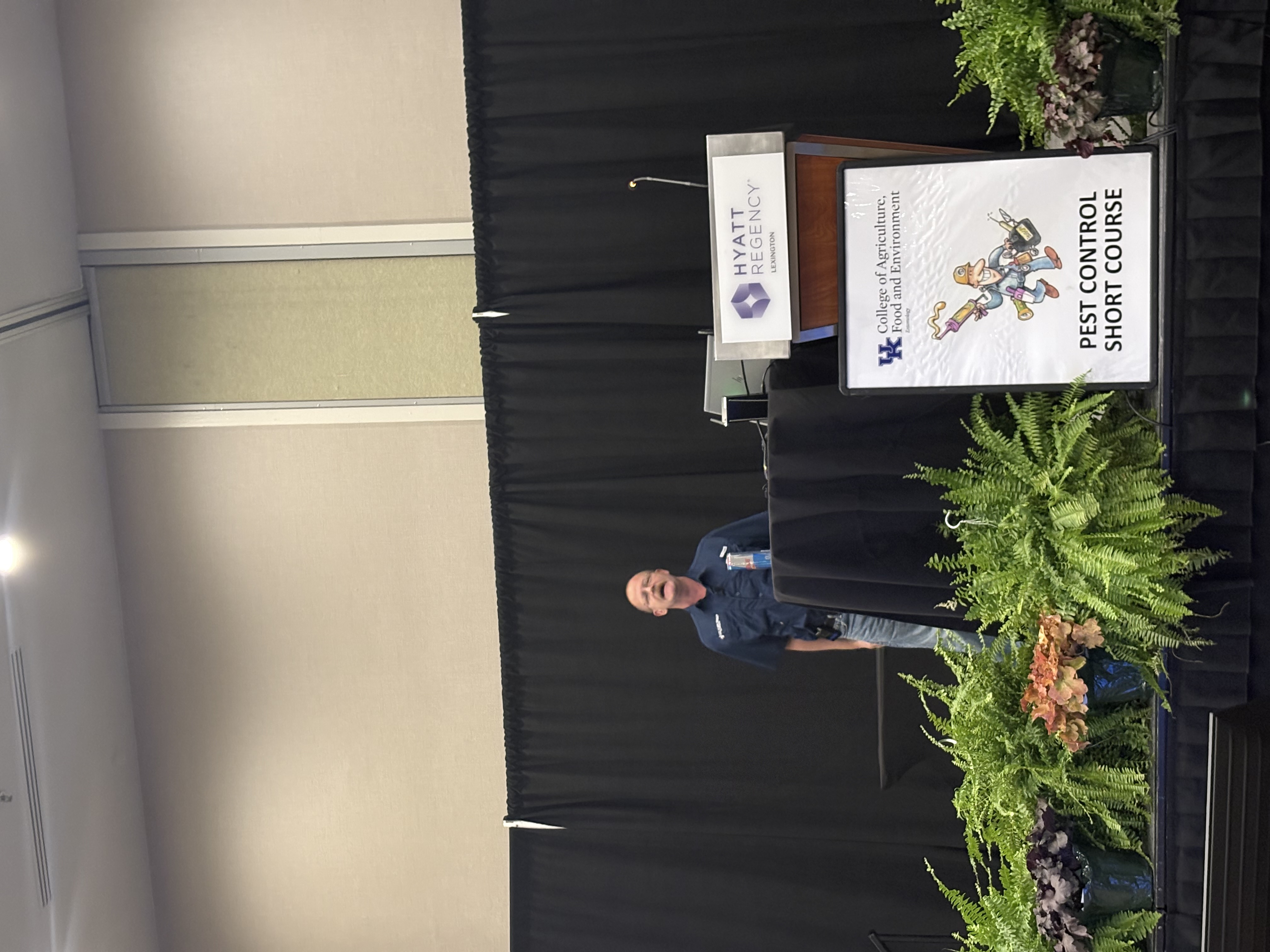
- - Timmy Madere, urban rodentologist ,City of New Orleans Mosquito, Termite and Rodent Control Board, took a closer look at rodent IPM and where PMPs may be missing the mark in getting to the root of the issue. Madere said the No. 1 issue PMPs face with rodent control is not being observers of rodent behavior during inspections and trapping. Consider rodent stations and trap placement in alignment with a rodent’s behavior, he said. “Don’t forget to look upwards when you’re doing rat work,” he said. “If you don’t have a ladder in your truck, you’re not doing rodent control correctly.” When inspecting for rodents, lines and shadows are key areas to observe and focus on. Burrows, droppings gnaw marks and rub marks are visual indicators of rodent activity as well, he said.
- - Dr. Christopher Hayes, extension associate, North Carolina State University, shared a PCO’s guide to battling bed bugs, fundamentals of management and conducting research. Identification is one of the main reasons why bed bug control can fail, Hayes said. Cimex lectularius and C. hemipterus are the two most common bed bug species, but they can be easily confused and misdiagnosed, especially if trying to be identified by a customer or non-expert. “It’s our job as experts in the room to make sure homeowners are educated” Hayes said. Regardless of species, basic biology of bed bugs is the same (a seven-stage life cycle and one blood meal), Hayes said. When doing surveillance and inspection, you want to ask yourself, “Is it a new, ongoing or reinfestation? Has another company already come in to treat it?” Hayes said. To conclude, Hayes shared the cost for bed bug treatments are going up, and asked, “Are bed bugs spreading, or plateauing?” He said he believes there has been a small plateau, but there’s still money to be made in the service market.
Latest from Pest Control Technology
- Earn CEUs from Your State at This Week’s Mosquito Control Virtual Conference
- Jody Green Talks Ticks at Purdue Conference
- Truly Nolen Pest Control Promotes Freize, Hackett
- Preserving Culture, Providing Opportunities Key in Hoffman’s Decision
- Winter Weather Could Decide How Bad Mosquito Season Gets
- Trent Frazer Discusses How Mosquitoes Survive Winter
- Barnes Exterminating Acquires Tennessee Pest Solutions
- Pest Index Up 9% YOY in January