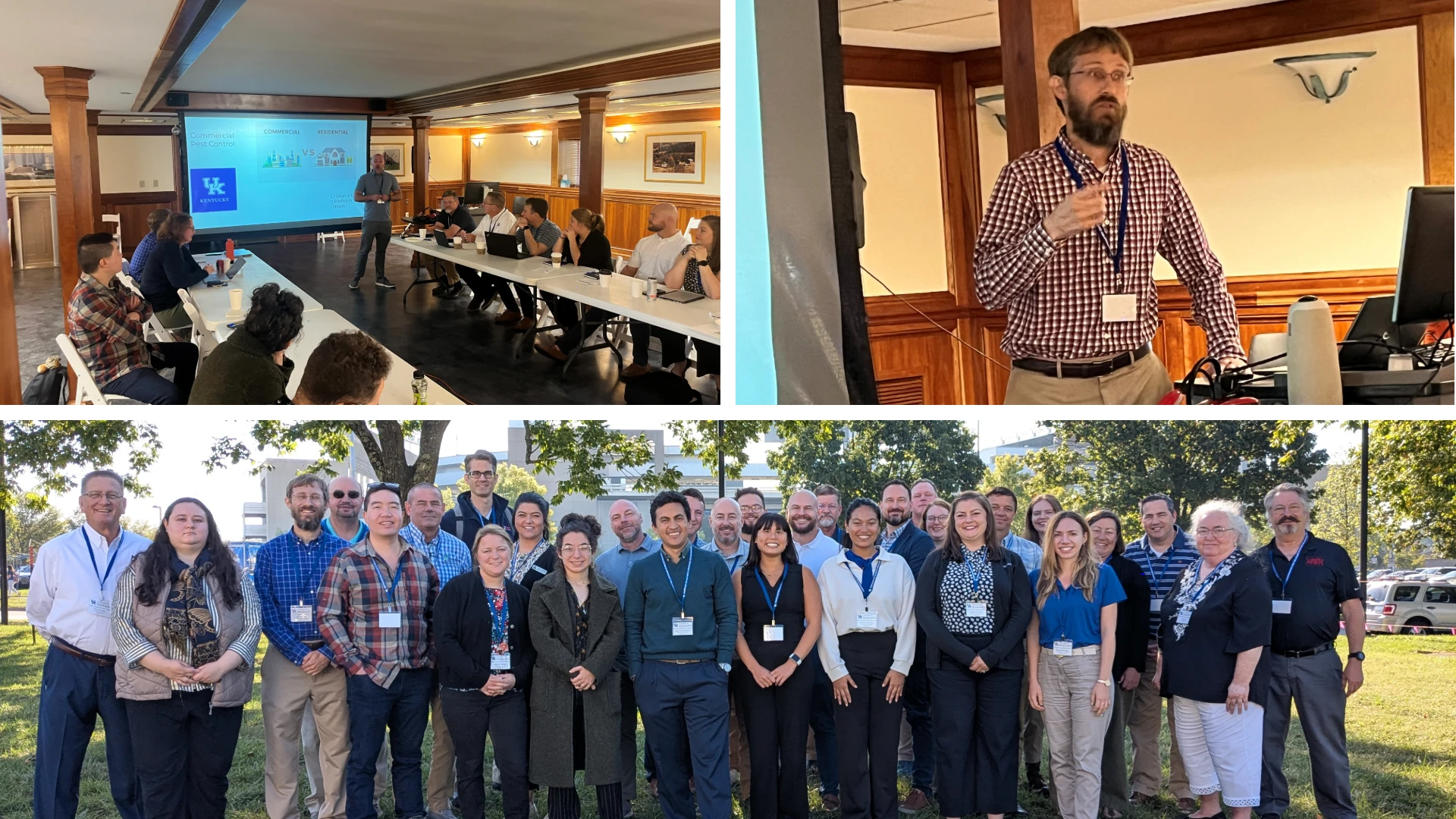
Brad Harbison
LEXINGTON, Ken. – Operating in an era of rampant technological advances and increased regulatory pressures, pest management professionals rely on all their resources — especially their university research partners — to stay ahead of the curve. Now in its fifth year, the University of Kentucky’s Technical Director’s’ Retreat brings together pest management leaders, researchers, and technical experts from across North America to exchange knowledge, guide research and shape the future of pest control.
The retreat is the brainchild of Dr. Zach DeVries, associate professor of urban entomology and The Bill Gatton Foundation Early Career Professor at the University of Kentucky, who opened this year’s event — held Sept. 30 – Oct. 1, 2025, in Lexington, Ky. — by reflecting on the retreat’s overarching goal. “We're trying to bring technical folks together, people with technical experience, together for discussion about how to move past management forward,” he said.
DeVries said the goals of each session were to provide two-way learning opportunities. "For us as a research lab, these discussions help shape the projects we pursue,” he said. “Our hope is that the technical insights we share can support you in tackling the challenges you face."
DeVries also acknowledged the growth of the retreat, the importance of ongoing industry support, and the role of the steering committee in helping shape the future of this gathering. He thanked sponsors Control Solutions, Inc., Douglas Products, Envu and Syngenta.
UK RESEARCH UPDATES. The first part of the retreat was presentations from students and trainees in the DeVries laboratory: Simona Principato, Ben Grady, Olivia Katz, Allison Lopina, Bandana Shreshta, Sophie Robinson and Julian Porras-Villamil.
Each trainee shared some of their current research, with topics including the health effects of bed bugs, bed bug behavioral responses to insecticides, cockroach allergen mitigation, cockroach behavior and cockroach control.
INDUSTRY-LED SESSIONS. Following the presentations from DeVries labs students, were interactives sessions led by industry professionals.
Chad Gore, entomologist and regional technical director, Rentokil Terminix, explored the growing role of AI. Gore acknowledged AI's usefulness in automation, data analysis, and everyday tasks, but emphasized its risks, such as hallucinations, misinformation, environmental impact, privacy issues and over-reliance. Gore then opened things up for discussion. Several attendees noted AI has potential to improve operational efficiencies by streamlining routine tasks and enabling smarter resource allocation. For example, smart traps reduce unnecessary trap checks by alerting technicians only when activity is detected, freeing up time for more valuable inspections. Also, AI-driven data analysis can optimize technician dispatch and routing, while also generating automated reports, including specialized insights like pest trends versus weather patterns. Several attendees noted that AI can improve service documentation using photos and technician notes and support technician training by creating personalized, targeted
“Exciting Updates and Trends in the Industry” was the topic of the discussion led by Ashley Roden, Sprague Pest Solutions. Roden surveyed the audience to get a better feel for issues they face and how they think technology can address them. Popular answers included: improved tool for better control methods, functional flow meters, and innovations such as eDNA sampling for invasive species detection. Workforce development was a recurring concern, especially technician readiness and the lingering impact of the COVID-era “learning gap.” Attendees noted that new hires often lack hands-on mentorship, prompting calls for a return to in-person training centers. Microlearning and short video modules were debated. The consensus seemed to be that they are useful as refreshers but ineffective as standalone training. Broader workforce challenges, including hiring and retention, highlighted the need for strategic investment in people as well as technology.
Commercial accounts were the focus of a session led by Mike Thome, Rentokil-Terminix, Cleveland, Ohio. Discussions centered around the unique challenges and opportunities in commercial pest control. Many attendees emphasized the complexity and long-term value of commercial accounts, particularly in food processing and multi-unit housing. Participants shared different business models, staffing structures and market strategies. For example, some use dedicated commercial technicians, while others rely on universal techs due to logistics. Attendees expressed frustration with the multi-unit housing segment, which is challenged by underpricing, inconsistent expectations and tenant turnover. Several attendees noted that success in commercial pest control comes down to specialized training, accountability and smart pricing.
The final session was a discussion on regulatory concerns led by Kevin Thorn, owner of Thorn Pest Solutions. Thorn surveyed participants and determined three topics to discuss: increased rodenticide regulation, inconsistent state-level regulations (preemption), and AI restrictions. Attendees broke up into three groups of about 10; each group tackled one of those topics. The discussion on rodenticides noted that while some of the regulations are warranted (due to environmental impacts), overregulation won’t solve systemic issues without addressing agricultural and OTC use. Concerns were raised over cost burdens, equity, and unintended public health consequences. The session stressed proactive adaptation, better data use and engaging regulators and advocacy groups early.
In closing the meeting, DeVries thanked everyone for attending and participating, noting that “this event remains one of my favorite things I get to do. It’s foundational for our work and allows us to truly support the industry — not to mention how much fun it is.” DeVries added that he and his team are already planning for 2026 and looking forward to continuing to move the pest management industry forward.