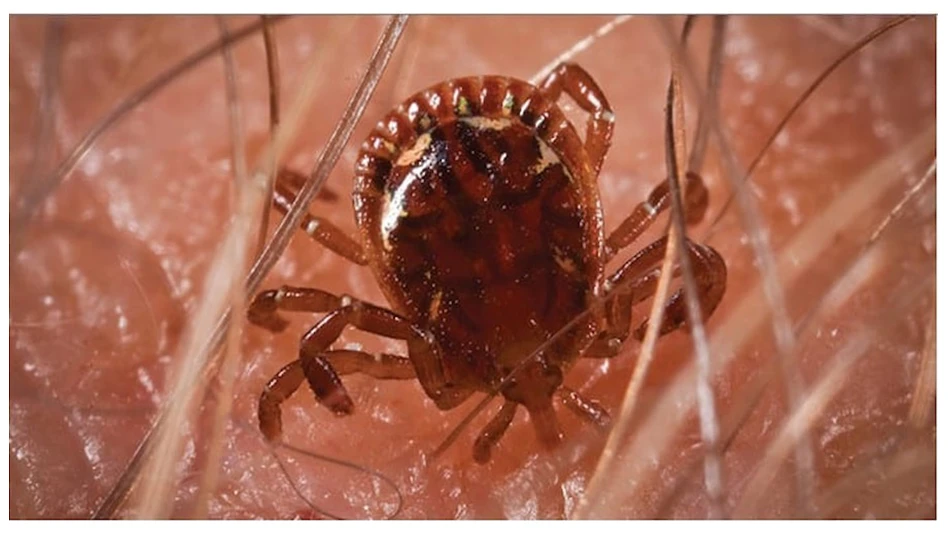
AMHERST, Mass. – A University of Massachusetts Amherst team at the New England Regional Center of Vector-borne Diseases (NEWVEC) announced new research into a medical therapy that may be effective at treating Lyme disease.
The therapy is used to inhibit the growth of cancer cells. Lyme disease, the most common vector-borne disease in the U.S., is spread by infected deer ticks and doesn’t always respond to antibiotics.
Stephen Rich, professor of microbiology and executive director of NEWVEC, said that the therapy is a long way away, but early findings are encouraging.
“There are people who have cases of Lyme disease that go on and on,” Rich said. “So there’s always interest in finding new therapies or new ways to inhibit the growth of the bacterium. And based on what we’re seeing in the lab, this may be one of those ways.”
Rich said the research will continue at NEWVEC, which was funded by the Centers for Disease Control and Prevention with a $10 million award to prevent and reduce tick- and mosquito-borne diseases in New England.
Latest from Pest Control Technology
- Earn CEUs from Your State at Next Week’s Mosquito Control Virtual Conference
- Preserving Culture, Providing Opportunities Key in Hoffman’s Decision
- Winter Weather Could Decide How Bad Mosquito Season Gets
- Trent Frazer Discusses How Mosquitoes Survive Winter
- Barnes Exterminating Acquires Tennessee Pest Solutions
- Pest Index Up 9% YOY in January
- Arrow Exterminators Acquires Hoffman's Exterminating
- PMPs Plan Mera Peak Summit for Parkinson's





