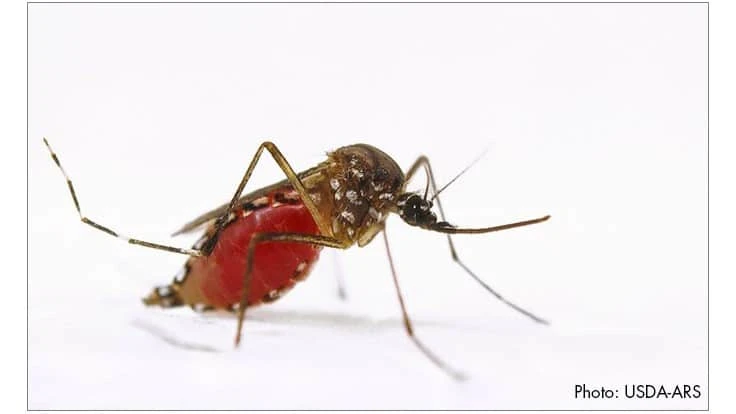
(Photo: An engorged female Aedes aegypti mosquito (vector of dengue virus, Zika virus, and chikungunya virus) rests following a bloodmeal. Photo by Jose Ramirez)
Scientists with USDA’s Agricultural Research Service (ARS) are working to bring more weapons to bear against one of the most dangerous creatures in the animal kingdom: the mosquito.
Mosquitoes spread diseases such as malaria, dengue, West Nile, yellow fever, and Zika, which affect millions of people around the world annually. According to the Centers for Disease Control and Prevention, severe cases of West Nile virus have increased in the United States by nearly 25% since 2008, and dengue has risen 300% worldwide in the past 30 years.
Chemical pesticide control measures help reduce the mosquito population, but according to Jose Luis Ramirez, a research entomologist at the ARS Crop Bioprotection unit in Peoria, IL, an integrated approach that adds cultural and biological methods is the best mitigation strategy.
Chemical pesticides can quickly control an insect pest population, but drawbacks include persistence in the environment and insecticide resistance from targeted insects. The advantages of microbial control include reducing chemical pesticide use, improving crop quality, and reducing environmental contamination.
“Mosquitoes transmit diseases to humans, pets, and livestock,” Ramirez said. “Non-chemical control offers an environmentally friendly alternative to reduce the impact of mosquitoes on animal health and the annual economic losses to U.S. agriculture.”
Ramirez and his colleagues are evaluating fungi and bacteria that already exist in nature and turning these mosquito-killing microbes into biopesticides that target mosquito eggs, larvae, and adults. The process is similar to combatting invasive plants by importing natural enemies from their homelands. Researchers identify beneficial microbes, test them for specificity against a target pest, then develop large-scale production for release against the pest.
Successful microbial biopesticides include Bacillus thuringiensis var. israelensis (Bti), a pathogenic bacterium that produces protein crystals that break open the mosquito larval gut when ingested, and Wolbachia, a bacterium that interferes with the reproduction of the yellow fever mosquito, Aedes aegypti.
“Non-chemical strategies allow farmers to practice pest control over vast areas without environmental contamination and the detrimental effects on beneficial insects, such as pollinators, that are important for crop production,” Ramirez said.
Although it’s now late in the season, there are still plenty of things people can do to reduce mosquito infestation, and it’s not too early to start thinking about next year.
“We are moving towards the end of the mosquito season for most places in the United States,” Ramirez said. “However, removing mosquito breeding habitats will not only help this season, but also remove eggs that could overwinter and become the new generation of mosquitoes next year.
Source: USDA ARS