Edwin Remsberg
In Baltimore, Maryland, people living in low-income urban neighborhoods are more at risk of contracting West Nile virus, a mosquito-borne disease, than people living in more affluent neighborhoods. So reports a new study published in the Journal of Medical Entomology.
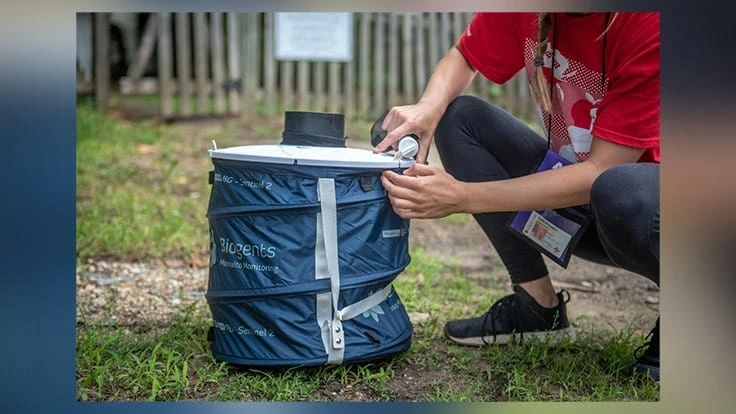
Lead author Sarah Rothman, a graduate student in the Department of Environmental Science and Technology at the University of Maryland College Park, says, "Our study is the first in Baltimore to document how West Nile virus infection in mosquitoes varies relative to neighborhood socioeconomics. Knowing where mosquito abundances are high, and what diseases they carry, can help focus surveillance and management programs where they're needed most."
Mosquito-borne disease is a growing threat in cities throughout the U.S. Vacant lots and abandoned buildings can create environmental conditions that bolster mosquitoes and the diseases they carry. Overgrown vegetation, standing water for breeding, and access to blood-meals from rodents, cats, and birds can put nearby residents at risk of contracting mosquito-borne diseases like Zika, chikungunya, and West Nile viruses.
This study builds on previous research that found mosquito-borne disease is an environmental justice issue in Baltimore. Co-author Shannon LaDeau, a disease ecologist at Cary Institute of Ecosystem Studies, says, "Past work revealed that lower income neighborhoods tend to have more mosquito habitat than more affluent neighborhoods, leading to higher risk for people who are already vulnerable due to limited access to healthcare. We also found that larger mosquitoes, which may have greater infection potential, thrive in less affluent neighborhoods."
The latest study took place over three years and focused on five neighborhoods in Baltimore representing a socioeconomic range. Focal neighborhoods included two neighborhoods with incomes below the median, two at the median, and one above the median annual household income. All five neighborhoods consist of similar blocks of rowhomes and are located within 2km of each other, minimizing environmental variation.
Click here to read more.
Source: EurekaAlert
Latest from Pest Control Technology
- Earn CEUs from Your State at Next Week’s Mosquito Control Virtual Conference
- Preserving Culture, Providing Opportunities Key in Hoffman’s Decision
- Winter Weather Could Decide How Bad Mosquito Season Gets
- Trent Frazer Discusses How Mosquitoes Survive Winter
- Barnes Exterminating Acquires Tennessee Pest Solutions
- Pest Index Up 9% YOY in January
- Arrow Exterminators Acquires Hoffman's Exterminating
- PMPs Plan Mera Peak Summit for Parkinson's