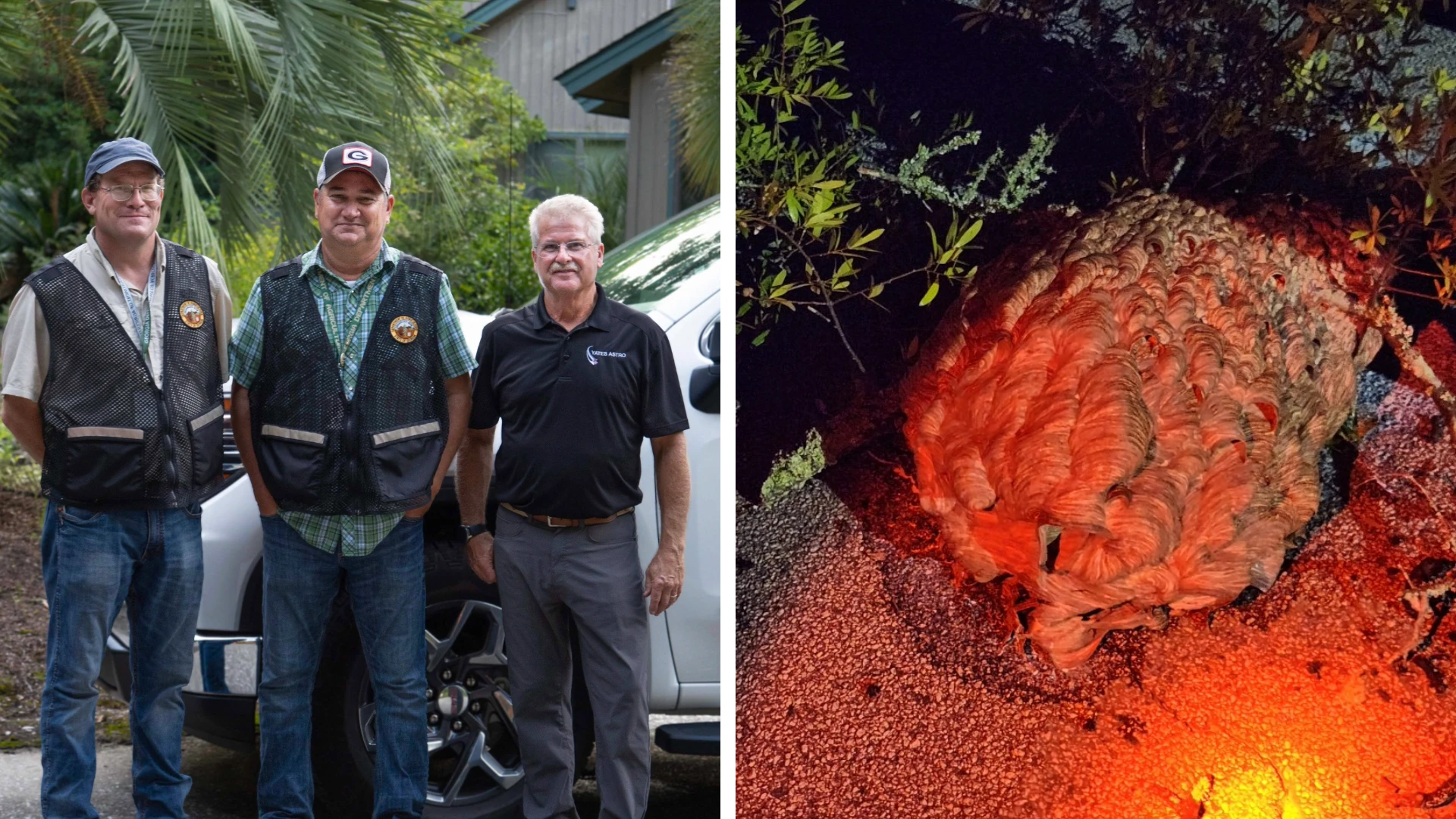
Photos courtesy of Yates-Astro Pest Control
SAVANNAH, Ga. — Yates-Astro Pest Control and the Georgia Department of Agriculture are taking proactive steps to eradicate the invasive yellow-legged hornets, scientifically named Vespa velutina, in Georgia.
Since August 2023, more than 70 nests have been located and destroyed, preventing thousands of hornets from endangering bees and agriculture in the state.
This hornet species, first confirmed in Savannah, Ga., in 2023, poses a threat to honeybees, native pollinators and agriculture across the Southeast, said Yates-Astro Savannah, Ga., branch manager Mark Willman. Georgia is a leading producer of honey and pollination dependent crops like blueberries, cucumbers, and watermelons.
Yates-Astro has supported efforts to locate, monitor and safely remove hornet nests before they spread, Willman said.
“We have the ports that come from Asia, so they most likely came in on a container ship, and established the first nest,” he said. ‘Each nest will generate 200 queens, and 10% of them will start another nest, so it doesn’t take long for these hornets to populate.”
Control methods for each nest depends on the location, Willman said.
“The nests have a hole at the very top of it, which is strange, but as long as you’re treating down the hole, they can’t really get out,” he said. “There’s about 11 people from the state working in this area with more than 2,000 traps out and monitor them weekly; these guys are extremely good at finding these nests."
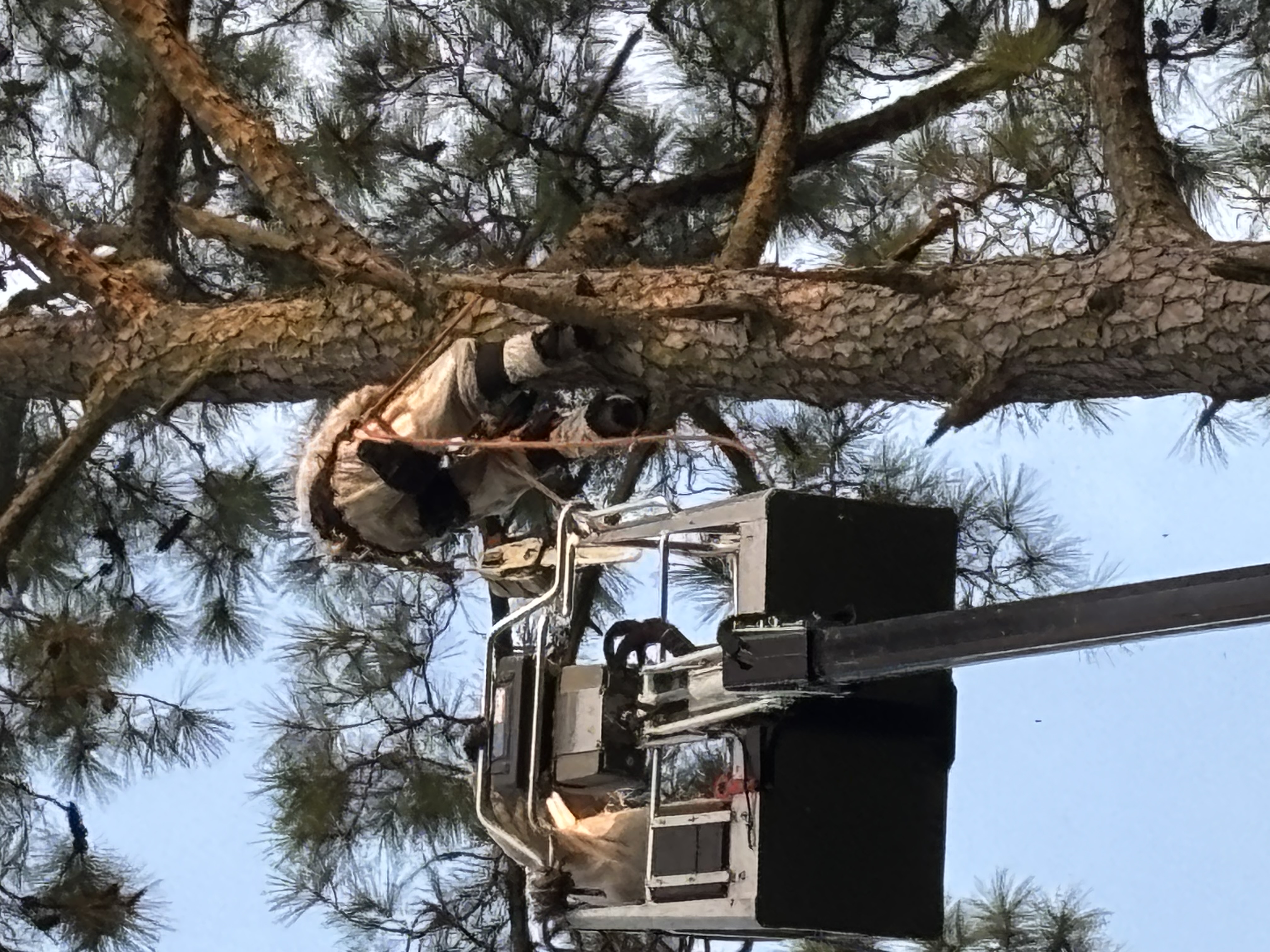
Yates-Astro contracts with a local tree company that has a man-made lift that goes up to 90-feet to be able to reach the nests, and sometimes, a professional tree climber is involved if the nests are unreachable, Willman said.
After the nests are removed, the state will send the nests to the University of Florida and Georgia to do DNA tests on them to see what they’re feeding on. Willman said the state has found unique, creative ways to locate each nest.
“The state will go to beekeepers [property] and let the hornet catch a bee, the hornet will butcher the bee in mid-air, and they will fly back to their nests. They’ll just keep on doing this over and over until the state finds the nests,” he said. “The state has also experimented with gluing a GPS device to the hornet and have done that successfully.”
Willman said the state still has hopes that their efforts are going to eliminate the population.
“We’re putting a pretty good dent in them,” he said. “Pest control companies can be scared sometimes to work with their department of agriculture, but they’re really great people.”
Watch the company's full YouTube video on their efforts here.
Latest from Pest Control Technology
- Google Ads Mistakes That Cost PCOs Thousands
- Zach DeVries Details his Cockroach Research, Importance of UK Short Course
- Sprague Strengthens California Leadership Through New Appointments
- PestInsight Empowering Youth in Africa and Beyond Through Education
- Guest Editorial: Making Safety the Standard on Every Service Call
- Truly Nolen Pest Control Promotes Tuck, Stewart
- Little to No Hesitance When Asking for Customer Reviews, PCOs report
- Arrow Termite & Pest Control (La.) Acquires Ark-La-Tex Exterminators