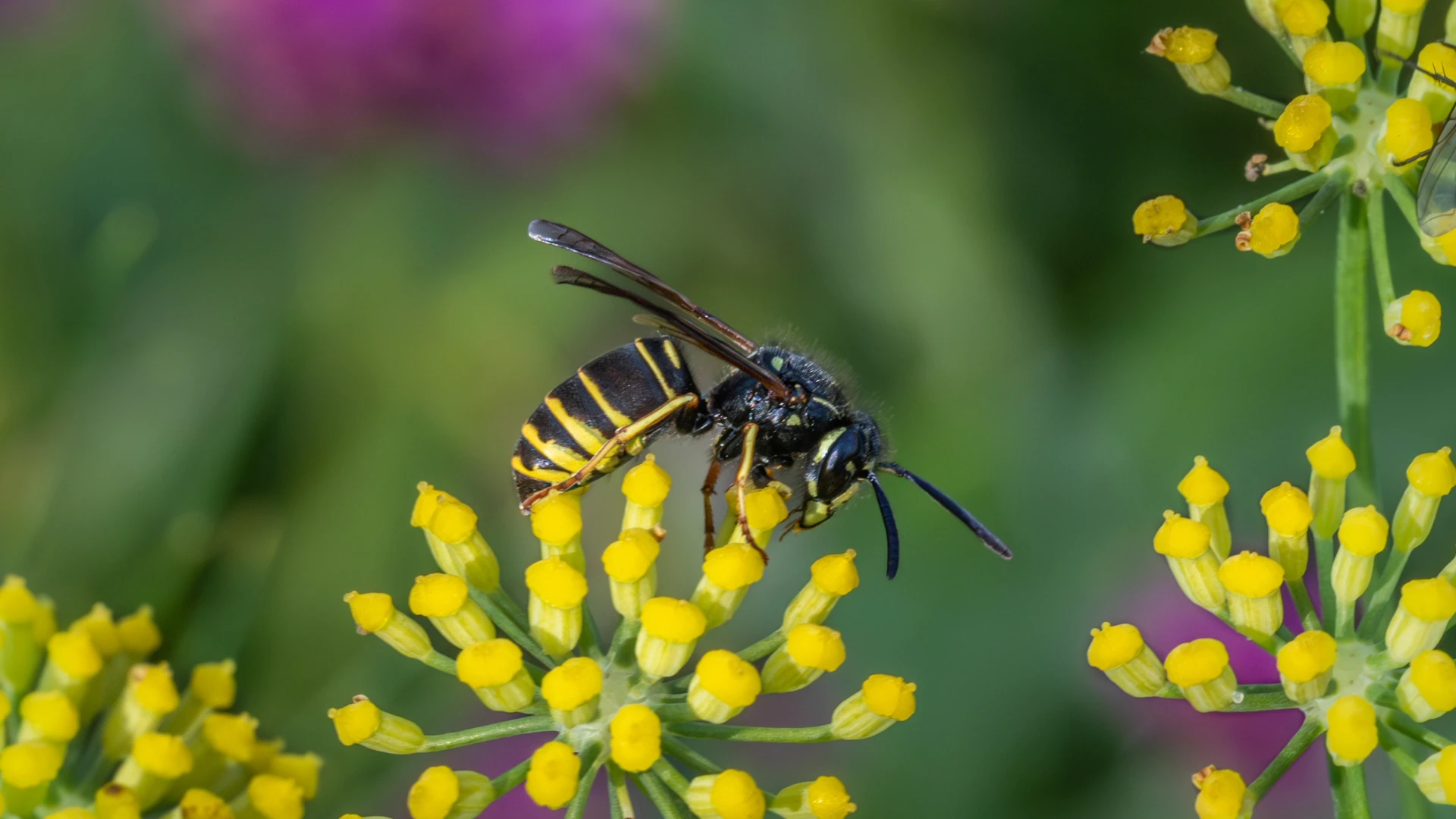
iStock | marcophotos
Editor's note: This article was adapted from Pinto & Associates.
To control yellowjackets nesting inside a wall or ceiling void, you need to pinpoint the nest or you need to find the outside entrance hole. Otherwise, your insecticide application may simply agitate the yellowjackets. Then they're apt to create a new exit, maybe chewing through plasterboard and into a room.
A nest may be only a few inches from the entrance hole, or it may be inside a void 30 feet away. You can sometimes locate the nest by placing a listening device (or your ear) against the wall and listening for buzzing and scratching.
If you know the location of the entrance hole (but not of the nest itself), you can inject insecticide into the hole. But if the nest is far away, an aerosol may not reach it. A residual dust blown into the opening penetrates further and is also carried into the nest on the bodies of returning workers. A good practice is to first use a "quick-freeze" aerosol product to eliminate stirred-up wasps near the entrance and, if you're lucky, all the way back down to the nest. Then blow insecticide dust into the hole, but don't close the hole. Make sure the dust or aerosol you use is labeled for the site (indoors, outdoors, void) and application method you are using.
If you know precisely where the nest is inside the void, you can drill a small hole into the wall and inject an insecticide aerosol or dust directly into the nest. After treatment, seal your drill hole if it's on the inside. If you've also found the nest entrance hole, dust it and leave it open after treatment so that any returning worker yellowjackets will be killed.
Some PMPs recommend that after a few days, you either remove the void nest (if easily done) or inject a long-lasting repellent insecticide into the nest. This will kill any new yellowjackets that may still emerge and it will prevent dermestid beetles and other secondary pests from infesting the old nest. Then seal the entrance hole to prevent a new yellowjacket queen from using the same site the following year.
The authors are well-known industry consultants and co-owners of Pinto & Associates.
To control yellowjackets nesting inside a wall or ceiling void, you need to pinpoint the nest or you need to find the outside entrance hole. Otherwise, your insecticide application may simply agitate the yellowjackets. Then they're apt to create a new exit, maybe chewing through plasterboard and into a room.
A nest may be only a few inches from the entrance hole, or it may be inside a void 30 feet away. You can sometimes locate the nest by placing a listening device (or your ear) against the wall and listening for buzzing and scratching.
If you know the location of the entrance hole (but not of the nest itself), you can inject insecticide into the hole. But if the nest is far away, an aerosol may not reach it. A residual dust blown into the opening penetrates further and is also carried into the nest on the bodies of returning workers. A good practice is to first use a "quick-freeze" aerosol product to eliminate stirred-up wasps near the entrance and, if you're lucky, all the way back down to the nest. Then blow insecticide dust into the hole, but don't close the hole. Make sure the dust or aerosol you use is labeled for the site (indoors, outdoors, void) and application method you are using.
If you know precisely where the nest is inside the void, you can drill a small hole into the wall and inject an insecticide aerosol or dust directly into the nest. After treatment, seal your drill hole if it's on the inside. If you've also found the nest entrance hole, dust it and leave it open after treatment so that any returning worker yellowjackets will be killed.
Some PMPs recommend that after a few days, you either remove the void nest (if easily done) or inject a long-lasting repellent insecticide into the nest. This will kill any new yellowjackets that may still emerge and it will prevent dermestid beetles and other secondary pests from infesting the old nest. Then seal the entrance hole to prevent a new yellowjacket queen from using the same site the following year.
The authors are well-known industry consultants and co-owners of Pinto & Associates.
Latest from Pest Control Technology
- Earn CEUs from Your State at Next Week’s Mosquito Control Virtual Conference
- Preserving Culture, Providing Opportunities Key in Hoffman’s Decision
- Winter Weather Could Decide How Bad Mosquito Season Gets
- Trent Frazer Discusses How Mosquitoes Survive Winter
- Barnes Exterminating Acquires Tennessee Pest Solutions
- Pest Index Up 9% YOY in January
- Arrow Exterminators Acquires Hoffman's Exterminating
- PMPs Plan Mera Peak Summit for Parkinson's





